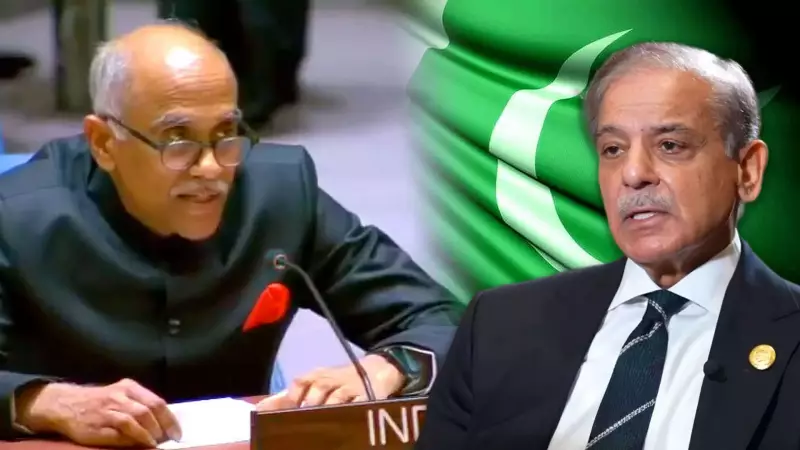
India Delivers Forceful Rebuttal to Pakistan at UN Security Council Over Operation Sindoor
In a significant diplomatic confrontation at the United Nations Security Council, India delivered a powerful and detailed counter to Pakistan's allegations concerning Operation Sindoor. India's Permanent Representative, Parvathaneni Harish, systematically dismantled what he termed as blatant falsehoods propagated by Islamabad, presenting a compelling case based on facts and evidence.
Exposing the Reality Behind Pakistan's Claims
Ambassador Harish began by reminding the international community of the brutal terrorist attack in Pahalgam, where 26 innocent civilians were massacred by Pakistan-backed terrorists. He emphasized that India's subsequent military response, Operation Sindoor, was a precise, restrained, and targeted action aimed solely at dismantling terror infrastructure across the border.
Contrary to Pakistan's narrative of success, Harish pointed to publicly available satellite imagery and intelligence reports that clearly showed:

- Significant damage to multiple Pakistani air bases
- Destruction of critical runway infrastructure
- Disruption of terror launch pads
The Crucial Disclosure: Pakistan's Ceasefire Request
In a revelation that fundamentally undermined Pakistan's position, Ambassador Harish disclosed that Pakistan's military leadership itself had pleaded for a halt to hostilities after facing the full force of India's calibrated response. This admission, presented before the UN Security Council, exposed the gap between Pakistan's public bravado and its private desperation.
Rejecting Terrorism as "New Normal"
India strongly pushed back against Pakistan's attempt to normalize terrorism as an acceptable state of affairs. Such dangerous thinking must never gain international acceptance, Harish warned, emphasizing that terror cannot be rewarded with narratives, and lies cannot mask the harsh reality of cross-border terrorism.
Reaffirming India's Sovereign Positions
On the issue of Kashmir, India reiterated its unwavering position that the region is and will always remain an integral part of India. The ambassador made it clear that no amount of Pakistani propaganda could alter this fundamental reality.
Regarding the Indus Waters Treaty, Harish explained that India's patience had understandably run out after decades of enduring terrorism and wars sponsored by Pakistan. The message was unambiguous: continued Pakistani aggression would have consequences across all domains of bilateral engagement.
A Calm Yet Resolute Diplomatic Stance
Throughout the proceedings, India maintained a clear, calm, and resolute diplomatic posture. The presentation was methodical, evidence-based, and delivered with the confidence of a nation that knows its facts are unassailable. India's UN intervention served multiple crucial purposes:
- Exposing Pakistan's false narratives before the international community
- Presenting irrefutable evidence of India's restrained yet effective response
- Revealing Pakistan's own admission of vulnerability through its ceasefire request
- Reaffirming India's sovereign positions on Kashmir and water sharing
- Warning against any normalization of terrorism as state policy
The diplomatic exchange at the UN Security Council marked another chapter in the ongoing struggle between truth and propaganda, with India firmly establishing that facts, when presented with clarity and conviction, can effectively counter even the most persistent of false narratives.