

India Denies Any Talks with Iran on Hormuz Strait Toll Charges
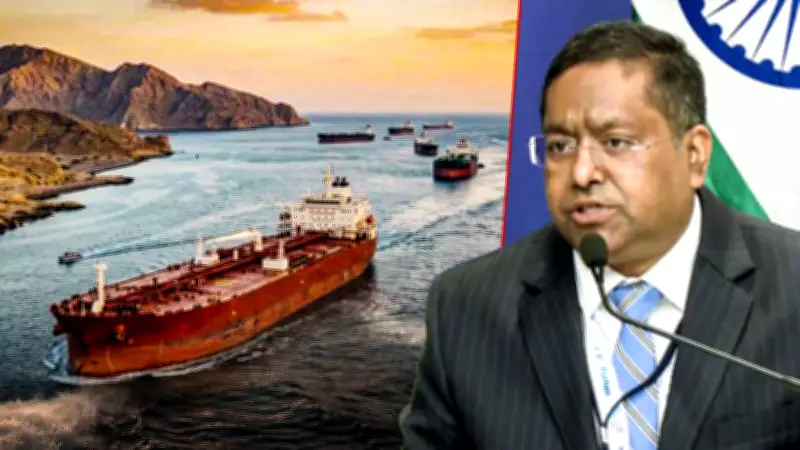
The Ministry of External Affairs (MEA) has categorically denied any discussions with Iran regarding the imposition of toll charges on Indian-flagged or operated vessels passing through the strategically critical Strait of Hormuz. In a statement issued on Thursday, MEA spokesperson Randhir Jaiswal dismissed recent reports suggesting such levies, emphasizing that no proposal has been formally raised with the Indian government.
Heightened Tensions in a Vital Maritime Corridor
This clarification comes at a time of significant regional tensions, with the ongoing Iran conflict causing disruptions in one of the world's most important shipping lanes. The Strait of Hormuz serves as a crucial maritime corridor, facilitating the transport of a substantial portion of global oil and gas supplies. Any potential restrictions or policy changes in this area are viewed as matters of international concern, given their potential impact on global energy markets and trade flows.
Strategic Importance of the Strait of Hormuz
The narrow waterway connecting the Persian Gulf with the Gulf of Oman remains indispensable to global commerce. Key facts about its significance include:

- It carries approximately one-fifth of the world's oil consumption
- It serves as a primary transit route for liquefied natural gas (LNG) shipments
- It represents a critical chokepoint for energy supplies to Asia, Europe, and beyond
India's response underscores its commitment to maintaining unimpeded maritime access through this vital passage, which is essential for both its energy security and broader economic interests. The government's swift denial of toll discussions reflects its proactive approach to safeguarding national interests amid evolving geopolitical dynamics in the region.






