India and EU Set to Announce Major Agreements at Upcoming Summit
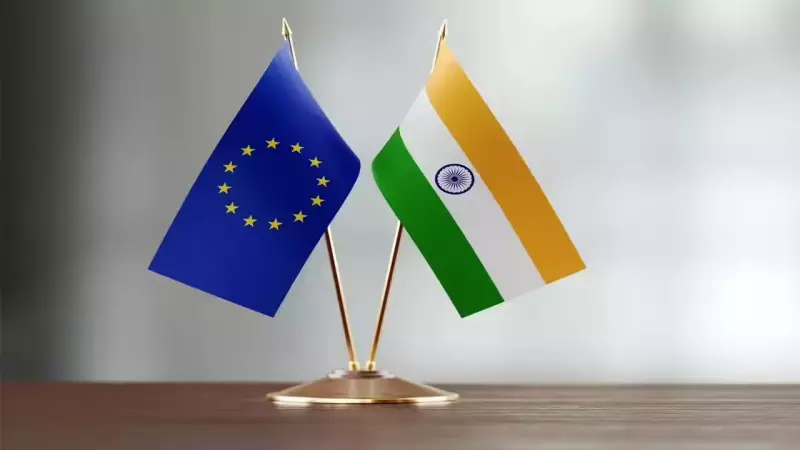
New Delhi prepares to host a landmark India-EU summit next week. Diplomatic sources confirm both sides will announce the successful conclusion of negotiations for a comprehensive free trade agreement. The formal signing ceremony will follow later this year after legal procedures complete.
Key Outcomes Expected from the Summit
European Council President Antonio Costa and European Commission President Ursula von der Leyen arrive in India on January 25. They will co-chair the sixteenth India-EU summit alongside Prime Minister Narendra Modi. These distinguished leaders will also serve as chief guests for India's Republic Day parade celebrations.
The summit represents what officials describe as the highest point in India-EU relations. Beyond the free trade agreement, participants anticipate two additional significant agreements:

- A security and defence partnership to facilitate industrial collaboration
- A mobility agreement to manage migration flows effectively
Strategic Agenda and Ongoing Negotiations
Leaders plan to adopt a Joint Comprehensive Strategic Agenda covering 2026-2030. This framework builds upon the EU's strategic agenda for India released last year. Indian officials have endorsed this agenda as very positive, noting its alignment with Indian interests.
Negotiations continue on several contentious issues within the free trade agreement. Both sides work to resolve differences concerning the EU's carbon border adjustment mechanism. Discussions also address Brussels' insistence on incorporating commitments to the Paris Agreement on climate change.
Sources indicate a compromise solution appears likely regarding the carbon border tax. The Paris Agreement will receive mention within the FTA text, but not in a manner that restricts India's policy flexibility. The EU maintains that Paris Agreement commitments must appear in the agreement, while India views this as a sovereignty matter separate from trade discussions.
Implementation Timeline and Process
The formal signing of the free trade agreement awaits completion of legal scrubbing and approval by the European Parliament. Both parties commit to accelerating this process to enable the agreement's entry into force as quickly as possible. The entire procedure should conclude within this calendar year.
Regarding the carbon border adjustment mechanism, the EU will not grant waivers to India or any other nation, applying the same rules to its own companies. However, Brussels discusses with New Delhi potential measures to support India's decarbonization efforts.
Security Partnership and Global Issues
The security and defence agreement represents the second major outcome from the summit. This partnership acknowledges both sides as trusting and like-minded partners despite differences over India's relationship with Russia.
Under this new defence framework, negotiations will soon commence for a Security of Information Agreement. This pact will enable classified information exchange and strengthen cooperation in security and defence domains. The EU suggests this could eventually allow India's participation in EU security initiatives under treaty-based frameworks.
Regional and global discussions will prominently feature Ukraine. The EU encourages India to provide additional humanitarian assistance as Russia targets Ukrainian energy infrastructure. Ukraine urgently requires power generators and equipment to restore damaged power plants, with schools already ceasing operations due to energy shortages.
Transatlantic tensions, including the Trump administration's Greenland remarks, may also surface during summit conversations.
Mobility Agreement Objectives
The mobility agreement aims to facilitate sensible migration management between India and the EU. This involves addressing illegal migration flows while supporting balanced talent mobility. Such movement should serve India's development priorities alongside the EU's economic requirements.