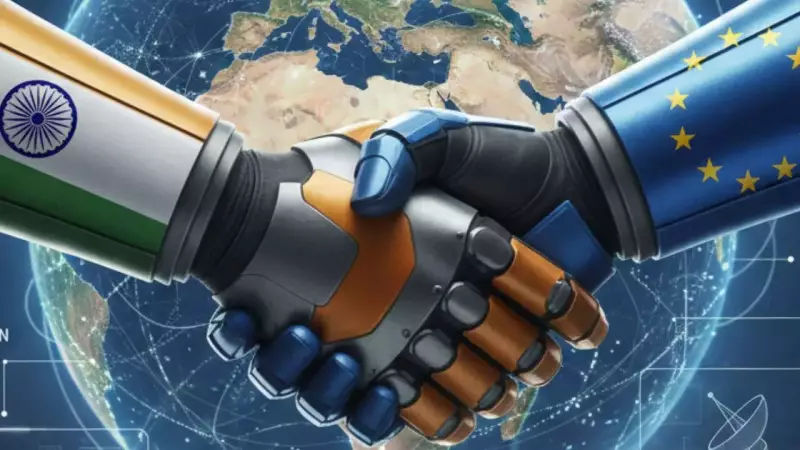
India and EU Elevate Ties with Historic Security Pact and 5-Year Strategic Agenda
In a significant diplomatic milestone, the India-EU summit has marked what officials from both sides describe as the highest point in bilateral relations. Beyond the political declaration announcing the conclusion of Free Trade Agreement (FTA) talks, the event witnessed the signing of a groundbreaking security and defence partnership agreement and the adoption of a joint comprehensive strategic agenda for the next five years.
Launch of a Landmark Defence Partnership
Under the newly inked defence agreement, India and the European Union have announced the launch of negotiations for a Security of Information Agreement. This pact will facilitate the exchange of classified information, demonstrating an unprecedented level of trust and reliability between the two entities, even amidst ongoing differences over the Russia-Ukraine conflict.
European Commission President Ursula von der Leyen hailed this development as a landmark departure, describing it as the first-ever security and defence partnership between the world's two largest democracies and economies. She emphasized that this trust-based platform will foster cooperation on strategic issues of paramount importance.

"In so doing, we will help to build each other's resilience... we have chosen to be reliable partners for one another," said von der Leyen.
In a recent interview, she had referred to this new defence partnership as a potential game-changer, while also cautioning that the transfer of high-end technology would be subject to national competence.
Deepening Cooperation Across Key Domains
The partnership is designed to enhance collaboration in several critical areas, including:
- Maritime Security: Strengthening efforts to ensure safe and secure sea lanes.
- Defence Industry and Technology: Promoting joint ventures and technological exchanges.
- Cyber Security: Addressing digital threats through coordinated measures.
- Counterterrorism: Combting extremist activities with unified strategies.
Prime Minister Narendra Modi highlighted that this partnership will reinforce a shared commitment to a rules-based international order, boost Indo-Pacific cooperation, and enable defence companies to engage in co-development and co-production initiatives.
Establishing a Defence Industry Forum
To facilitate defence industrial collaboration, both sides are planning to set up an industry-led India-EU Defence Industry Forum. This platform will bring together businesses from India and the EU, with official participation as observers and the involvement of EU Member States. The forum aims to conduct focused discussions on defence industry opportunities and explore potential collaborations.
Additionally, the joint statement indicated that both parties will explore possibilities for India's participation in relevant EU defence initiatives, where there is mutual interest and alignment of security priorities.
Strong Condemnation of Terrorism
In a move of particular importance to India, the leaders unequivocally condemned terrorism and violent extremism in all its forms and manifestations, including cross-border terrorism. They called for decisive and concerted international efforts to combat terrorism comprehensively and sustainably, in accordance with international law.
The joint statement specifically condemned the terrorist attack in Pahalgam, Jammu and Kashmir, on April 22, 2025, and the terror incident near the Red Fort on November 10, 2025.
Comprehensive Strategic Agenda for the Next Five Years
The newly adopted strategic agenda covers several key areas, such as:

- Prosperity and Sustainability: Focusing on economic growth and environmental stewardship.
- Technology and Innovation: Encouraging advancements in digital and scientific fields.
- Security and Defence: Enhancing preparedness across domains like maritime security, hybrid threats, counterterrorism, space security, and transnational crime.
- Connectivity and Global Issues: Addressing broader international challenges.
This forward-looking action plan builds upon more than two decades of strategic partnership, reflecting a commitment to work together as trusted, predictable, and like-minded partners in an increasingly complex geopolitical environment.
Key Initiatives Under the Strategic Agenda
Under this agenda, both sides have agreed to conclude an Investment Protection Agreement. This agreement aims to provide high, predictable standards of protection for investors from both regions and promote investment in high-growth and future-oriented sectors.
The agenda also emphasizes connectivity, seeking to deepen strategic collaboration under the India-Middle East-Europe Economic Corridor (IMEC). This initiative aims to diversify trade routes, reduce strategic dependencies, promote regional integration, and future-proof supply chains. It includes support for infrastructure development in maritime, rail, digital, and energy sectors.
Furthermore, the agenda calls for advancing the EU-Africa-India Digital Corridor within the IMEC framework. This will involve the Blue Raman submarine cable system, which is designed to provide ultra-high-speed, secure, and diversified data connectivity. The system is resilient to disruptions caused by natural disasters or acts of sabotage, ensuring robust digital infrastructure.
The geopolitical realities and growing cross-regional security threats have underscored the need for closer EU-India cooperation. This summit has set a new benchmark for bilateral engagement, paving the way for enhanced collaboration across multiple domains in the years to come.