

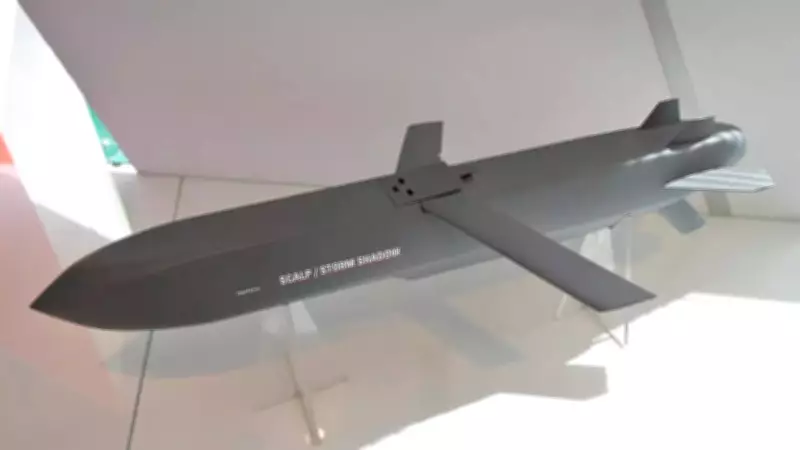
India and France Progress Toward Major SCALP Missile Procurement Deal
India and France are edging closer to finalizing a significant defence agreement valued at approximately 300 million euros for the acquisition of SCALP long-range cruise missiles. This development follows the successful operational deployment of these missiles by the Indian Air Force during Operation Sindoor last year, which demonstrated their effectiveness in precision strikes.
Operational Success Drives Procurement Discussions
Defence officials have confirmed to ANI that a substantial quantity of SCALP cruise missiles is being ordered by the Indian Air Force from France, with ongoing negotiations aimed at sealing the deal imminently. The SCALP missiles were launched from Rafale fighter jets in Operation Sindoor, targeting terrorist headquarters of Jaish-e-Mohammed and Lashkar-e-Toiba located in Pakistan's Muridke and Bahawalpur districts.
These missiles were utilized in conjunction with BrahMos supersonic cruise missiles, resulting in the precise destruction of designated targets. Subsequent to the initial strikes on the night of May 6-7, the Air Force employed cruise missiles again to engage Pakistan Air Force bases, hitting 12 major air bases and eliminating multiple high-value assets, including fighter jets and surveillance aircraft on the ground.

Operation Sindoor: A Landmark Precision Strike Campaign
Operation Sindoor represented India's most extensive cross-border precision strike initiative since the Balakot operation in 2019. It was initiated in response to the April 22 terror attack in Pahalgam, Jammu and Kashmir, which claimed the lives of 26 civilians, including a serving Indian Navy officer and a Nepali national.
During this operation, India deployed a diverse array of high-precision weaponry, including:
- SCALP cruise missiles for long-range strikes
- HAMMER precision-guided bombs for destroying hardened structures like bunkers
- Loitering munitions for surveillance and terminal strike roles
A total of nine terror-linked sites were struck, with four located in mainland Pakistan and five in Pakistan-occupied Kashmir. The Ministry of Defence emphasized that no Pakistani military installations were targeted, confirming all locations as operational centres of banned terrorist groups.
SCALP Missile Capabilities and Integration
The SCALP missile, also known as Storm Shadow, is a long-range, air-launched cruise missile designed for deep-penetration attacks against high-value and heavily defended targets. Key features include:
- A strike range exceeding 250 kilometres
- Advanced guidance systems combining inertial navigation, GPS, terrain-reference navigation, and an infrared imaging seeker
- Low-observable design for evading radar detection
- Penetration warhead capable of destroying hardened targets such as bunkers and command centres
Operated by several nations including France, the UK, Italy, Greece, and India, the SCALP missile is integrated with the Indian Air Force's Rafale fighter jets, providing a stand-off strike capability that allows aircraft to engage strategic targets deep within enemy territory without entering heavily defended airspace.
Broader Defence Enhancements and Future Plans
In addition to the SCALP procurement, the Indian Air Force is also advancing plans to order a large number of Meteor air-to-air missiles for its Rafale fleet. These missiles will be integrated with the 26 Rafale Marine fighters ordered for the Indian Navy, expected to be inducted over the next three to four years.
Following the exemplary performance of Rafale aircraft during Operation Sindoor and increasing regional threat perceptions, the Air Force is preparing to place an order for 114 additional Rafale combat aircraft. This proposal is anticipated to be reviewed by the Defence Acquisition Council in the near future.
With these strategic inductions, the Rafale is poised to become the cornerstone of the Indian Air Force, with its fleet strength projected to reach approximately 200 aircraft over the next 10 to 15 years, significantly enhancing India's aerial defence capabilities.






