India Receives Trump's Board of Peace Invitation
India received a significant diplomatic invitation on Sunday. The country was asked to join the Donald Trump-led Board of Peace. This organization aims to guide the peace process in Gaza. However, the invitation arrives with multiple complications that New Delhi must carefully consider.
What Is the Board of Peace?
US President Donald Trump first proposed the Board of Peace in September last year. It was part of a 20-point peace plan for Gaza. The original concept involved placing Gaza under temporary transitional governance. A technocratic Palestinian committee would handle daily public services under supervision from this new international body.
Initially, the United Nations approved both the peace plan and the Board of Peace concept. Many observers noted this arrangement effectively put the US President in charge of Gaza's administration.

The Evolving Mandate
The Board of Peace has undergone substantial changes since its announcement four months ago. The charter sent to invited nations reveals a far more ambitious vision. The document positions the Board as "a new International Organization and Transitional Governing Administration."
Notably, the charter no longer limits the Board's work to Gaza. Instead, it speaks about "solidifying Peace in the Middle East" and embarking on "a bold new approach to resolving Global Conflict." The 13-article charter resembles United Nations documents in structure and scope.
Membership Structure and Requirements
Invitations have gone to approximately sixty nations across traditional geopolitical lines. Countries like Hungary, Albania, Greece, Canada, Turkey, Egypt, Jordan, Paraguay, and Argentina have received letters. Pakistan also claims it received an invitation before India's was publicly reported.
The membership terms present unusual conditions. Countries accepting invitations receive a three-year tenure. However, they can become permanent members by paying one billion dollars in cash during their first year. This financial requirement represents a significant departure from typical international organization structures.
The Chairman Question
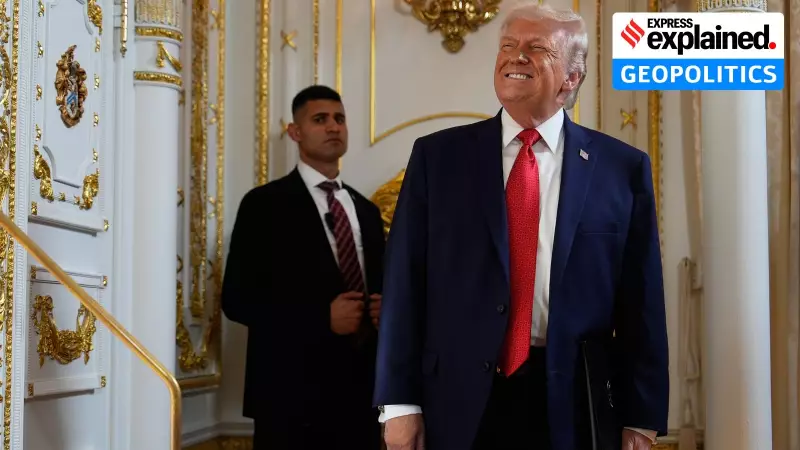
The charter contains perhaps the most controversial provision regarding leadership. It states that Donald J. Trump shall serve as inaugural Chairman of the Board of Peace. This appointment is separate from his role as US President.
More importantly, the charter establishes Trump's position as essentially permanent. He can only be removed if he voluntarily resigns or if the Executive Board unanimously votes him incapable. This Executive Board consists entirely of his appointees. Even if removed, a successor designated by Trump would take over.
This means accepting membership binds a sovereign nation to an organization where Trump remains chairman regardless of his political status. He would continue leading the Board even after leaving the US presidency.
Executive Board Composition
The founding members of the Executive Board include several prominent figures:
- US Secretary of State Marco Rubio
- US Special Envoy to the Middle East Steve Witkoff
- Trump's son-in-law and businessman Jared Kushner
- Former UK prime minister Tony Blair
- American businessman Marc Rowan
- World Bank Group president Ajay Banga
- US national security adviser Robert Gabriel
Diplomatic Implications for India
India now faces several tricky questions before deciding whether to accept this invitation. The Board's expanded mandate beyond Gaza creates uncertainty about its actual scope. The charter speaks vaguely about working in areas "affected by, but also threatened by conflict" without defining what constitutes a threat.
Trump's well-documented disdain for established international organizations adds another layer of complexity. He has repeatedly criticized the United Nations, cut US funding to the organization, and withdrawn America from multiple international bodies.
The Board of Peace appears designed as what some analysts call a 'parallel UN.' Its structure and ambitious global conflict resolution goals directly challenge existing international institutions.

So far, only Hungary has announced definite acceptance of the invitation. Other nations appear to be carefully weighing their options. India's decision will signal its position on this unconventional diplomatic initiative and its relationship with both traditional international structures and Trump's vision for global governance.
The invitation requires countries to consent "to be bound by this Charter." This represents a significant commitment that could have lasting implications for India's foreign policy and international standing.