

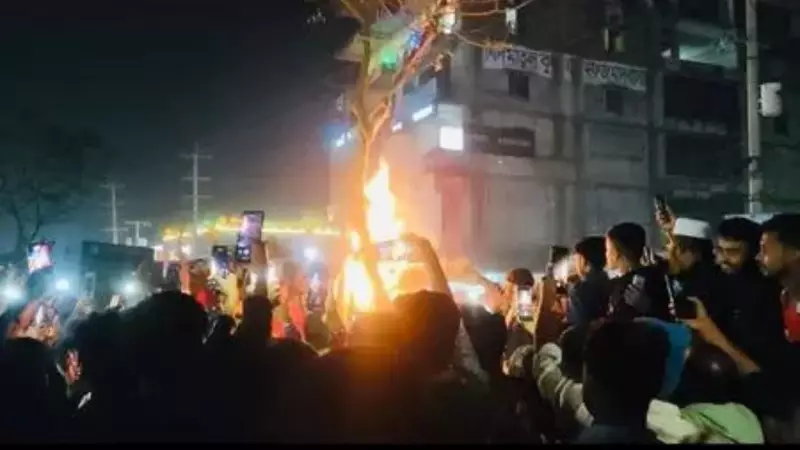
India has taken a firm diplomatic stance against Bangladesh, suspending visa operations at its mission in Chittagong and condemning in the strongest terms the brutal lynching of a Hindu man amid a wave of protests with an anti-India hue. The move comes after violent demonstrations targeted Indian diplomatic facilities following the death of radical activist Sharif Osman Hadi.
Visa Services Halted Over Security Fears
The Indian Visa Application Centre (IVAC) in Chittagong announced the suspension of all visa operations starting December 21, 2025. The decision was made due to serious concerns for the safety of the centre's staff and its premises. This action followed angry protests where demonstrators came dangerously close to the diplomatic facility on Thursday, despite the presence of Bangladeshi security personnel.
The situation escalated when the residence of the Assistant Indian High Commissioner in Chittagong was pelted with stones by a mob on Thursday. That same day, significant anti-India protests also erupted outside Indian assistant high commissions in Khulna and Rajshahi, with similar demonstrations occurring around the high commission in Dhaka a day earlier.

MEA Condemns "Barbaric Killing," Rejects False Equivalence
The Ministry of External Affairs (MEA) spokesperson, Randhir Jaiswal, described the killing of 25-year-old Dipu Chandra Das as "horrendous." Dipu, a garment factory worker, was beaten to death by a mob and set ablaze in Mymensingh over alleged blasphemy. New Delhi has urged the interim government in Dhaka to bring the perpetrators of this "barbaric killing" to justice.
The MEA also slammed attempts in Bangladesh to draw a false equivalence between the protests targeting Indian facilities and a separate demonstration outside the Bangladesh High Commission in New Delhi. Indian officials stated that about 20-25 youths gathered peacefully outside the Bangladesh mission on Saturday to protest Dipu's killing. "There was no attempt to breach the fence or create a security situation at any time," the MEA clarified, adding that police dispersed the group after a few minutes.
India labeled Bangladeshi media reports suggesting a similar security threat in Delhi as "misleading propaganda." Visual evidence of the events is publicly available, contrasting the scenes: angry protesters came in close proximity to the Indian facility in Chittagong, while a much smaller crowd in Delhi protested at a safe distance.
Political Backdrop and Ongoing Tensions
The protests in Bangladesh were sparked by the death of Sharif Osman Hadi, a prominent face in the 2024 anti-government protests that led to former Prime Minister Sheikh Hasina's departure. Hadi, known for his anti-India rhetoric and a leader of the radical group Inquilab Mancho, died days after being shot in the head by masked gunmen.
In response to India's demands for justice, Bangladesh's foreign affairs adviser, Md Touhid Hossain, stated that "the incident should not be conflated with the security of minorities." He emphasized that Dipu was a Bangladeshi citizen and that immediate action had been taken, with 12 arrests made so far in the Mymensingh lynching case as of Sunday. Hossain also claimed the protests in New Delhi left the Bangladesh high commissioner and his family feeling threatened.
Exiled Bangladeshi author Taslima Nasreen introduced a disturbing question on social media platform X, asking whether police, after initially rescuing Dipu, had handed him back to the violent mob. She described the lynching as a "jihadist festival."
India continues to monitor the situation closely, with officials in touch with Bangladeshi authorities. The core message from New Delhi remains clear: strong concern over attacks on minorities and an unequivocal demand for accountability and security for its diplomatic missions.






