India and Israel Poised to Sign Historic Defense Agreement During PM Modi's Visit
With Prime Minister Narendra Modi arriving in Tel Aviv on Wednesday, India and Israel are on the brink of finalizing a landmark defense agreement that promises to elevate security cooperation between the two nations to unprecedented levels. This strategic partnership, described by Modi as vital in today's uncertain world, is set to redefine bilateral ties with a focus on cutting-edge technology rather than conventional arms sales.
Focus on Technology Transfer for Exclusive Advanced Systems
Unlike previous engagements, this agreement is not centered on the sale of weapons. Instead, it emphasizes the transfer of technologies for advanced weapons systems that Israel has not offered to any other country to date. In his address to the Israeli Parliament, the Knesset, Modi underscored the importance of a robust defense partnership, stating, "In today's uncertain world, a strong defence partnership between trusted partners like India and Israel is of vital importance."
Two-Dimensional Defense Cooperation: Defensive and Offensive Systems
According to local Israeli media reports, the forthcoming Memorandum of Understanding (MoU) between India and Israel will encompass two key dimensions: collaboration on defensive systems and cooperation for offensive weapons. This comprehensive approach aims to address a wide spectrum of security challenges.

Defensive Systems: The agreements are expected to focus on Israel's renowned missile defense technologies. Key systems under discussion include:
- Israel Aerospace Industries' Arrow missile defence system
- Rafael's David's Sling, capable of handling medium-range missiles and drones up to 300 km
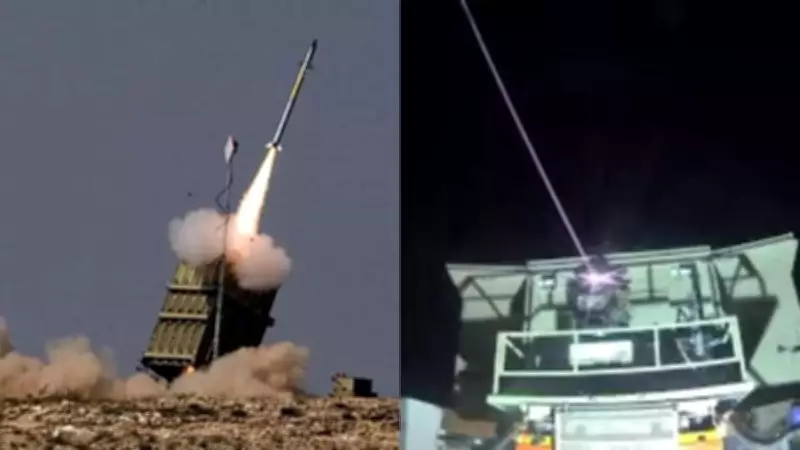
- Rafael's Iron Dome, designed to intercept short-range rockets from 4 to 70 km
- Rafael and Elbit's Iron Beam, a 100 kW laser weapon system effective against aerial threats up to 10 km
Despite the advanced nature of these systems, all involved Israeli companies have remained tight-lipped about the specifics of the intended deals.
Offensive Weapons: On the offensive front, agreements are anticipated, and in some cases already finalized, for several sophisticated weapons systems:
- Rafael's SPICE 1000 guidance kits
- Elbit Systems' Rampage air-to-ground missiles
- Ice Breaker naval cruise missiles
- IAI's supersonic Air LORA missiles
Strategic Imperatives: Fortifying India's Borders
The Modi government's push for enhanced defense capabilities stems from lessons learned during the Pakistan conflict in May, when Islamabad deployed Turkish drones and Chinese PL-15 long-range air-to-air missiles targeting Indian military and civilian assets. This experience has underscored the need for a more impregnable missile shield to protect India's extensive 15,106-km land borders and 7,516.6-km coastline.
While India currently possesses Russia's S400 missile shield, Israel-developed Barak systems, and indigenous Akash systems to counter aerial threats, there is a recognized need for more effective technologies like Israel's Iron Dome and Iron Beam. The goal is to integrate these systems into India's upcoming "Sudarshan Chakra" initiative, aiming for a pan-India multi-layered shield by 2035.
Technology Transfer Under 'Make in India' Initiative
A critical component of this agreement is the emphasis on technology transfer to enable local manufacturing under the 'Make in India' initiative. This approach not only enhances India's self-reliance but also ensures seamless integration of these advanced systems into the nation's defense infrastructure.
Advanced Weaponry Under Discussion
Golden Horizon Missile: Talks may include the acquisition of the Golden Horizon, believed to be a successor to the Sparrow target missile family. This rare class of weapon is designed for aircraft release, making it easily integrable with the Indian Air Force's Sukhoi-30MKI jets. With a strike range of 1,000-2,000 km and speeds reaching Mach 5, it can penetrate underground bunkers, hardened military installations, and even nuclear facilities. Its velocity makes interception by existing air-defense systems extremely difficult, surpassing India's BrahMos cruise missile, which travels at Mach 3.

Iron Beam Laser System: Discussions may also cover Israel's Iron Beam 100-kW-class laser weapon system, which would significantly bolster India's air defenses against drones and missiles. Notably, this system is cost-effective, with each shot costing approximately $2.
Formation of a Security Alliance
Another significant announcement expected is the establishment of a broader security alliance. Israeli Prime Minister Benjamin Netanyahu recently told his cabinet that he envisions India as part of a "hexagon of alliances" in the Middle East, including Arab nations, African nations, Mediterranean nations like Greece and Cyprus, and other Asian nations. The stated intention is to unite against what Netanyahu termed "the radical axes" of Islam, particularly referencing Iran's regime.
This historic defense agreement between India and Israel marks a pivotal moment in their bilateral relations, combining technological innovation with strategic security needs to create a formidable partnership for the future.