India and Japan Strengthen Ties with Focus on AI and Critical Minerals
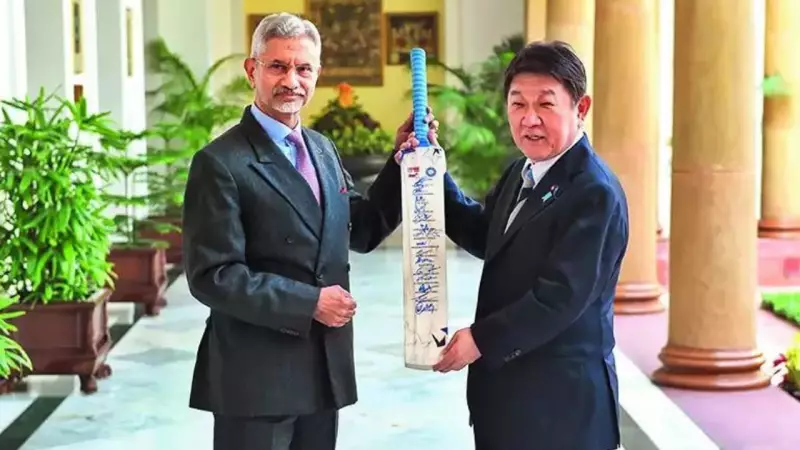
Foreign Minister S Jaishankar and his Japanese counterpart Toshimitsu Motegi led the 18th India-Japan strategic dialogue in New Delhi on Friday. The high-level meeting produced several key agreements aimed at deepening bilateral cooperation.
New AI Initiative and Critical Minerals Collaboration
Both nations decided to establish a Japan-India AI strategic dialogue. This new framework will promote innovation and growth through artificial intelligence technologies. The ministers emphasized the importance of economic security in today's global landscape.
"Economic security today is particularly paramount," stated Jaishankar during the discussions. "I think both our countries attach enormous importance to it, and how to de-risk our own economies, and how to de-risk the international economy are both very important."

The dialogue also focused on critical minerals cooperation. Officials agreed to convene the joint working group on critical minerals early this year. This group will advance collaboration in rare earths and other essential minerals under the economic security initiative.
Infrastructure Projects and Regional Engagement
Japan reaffirmed its commitment to the Mumbai-Ahmedabad bullet train project, known as Shinkansen. The Japanese government confirmed plans to supply India with the next-generation E10 Shinkansen train for this ambitious infrastructure development.
The strategic dialogue addressed broader regional concerns as well. Both sides agreed to enhance engagement on issues affecting South Asia, West Asia, and Africa. They also reaffirmed their commitment to supporting development initiatives in India's northeastern regions.
Multilateral Cooperation and Security Discussions
Jaishankar emphasized India's priority of working closely with Japan in various international forums. "We are leading democracies, we are the major economies of the world, and we have today not just an opportunity, but also an obligation, a duty to shape the global order," he explained. "In the current uncertain global situation, it's even more important that we work closely towards shared strategic goals."
The ministers discussed several security-related matters during their meeting:
- Resilient supply chains and their importance for both economies
- Defense cooperation between the two nations
- Energy security challenges and potential solutions
- Healthcare collaboration and maritime security concerns
Japan expressed particular interest in formalizing the deal to supply the Indian Navy with Unified Complex Radio Antenna systems. This defense equipment would enhance naval communications capabilities.
Quad Framework and Economic Partnerships
Amid questions about the Quad grouping's future, Jaishankar confirmed India's continued commitment to working with Japan through this framework. The Quad involves Australia, India, Japan, and the United States in Indo-Pacific cooperation.
Japan's foreign ministry spokesperson Toshihiro Kitamura highlighted the Quad's significance, stating that "in order to have the engagement of the US in this region, we believe that Quad is a very important framework to facilitate such cooperation."
The dialogue also produced agreements to boost startup cooperation through dedicated support initiatives. Both governments plan to increase engagement between their private sectors on economic security matters.
Before the strategic dialogue, the Japanese foreign minister called on Prime Minister Narendra Modi, underscoring the importance both nations place on their bilateral relationship. The comprehensive discussions covered multiple aspects of the India-Japan partnership, from technology to regional security.