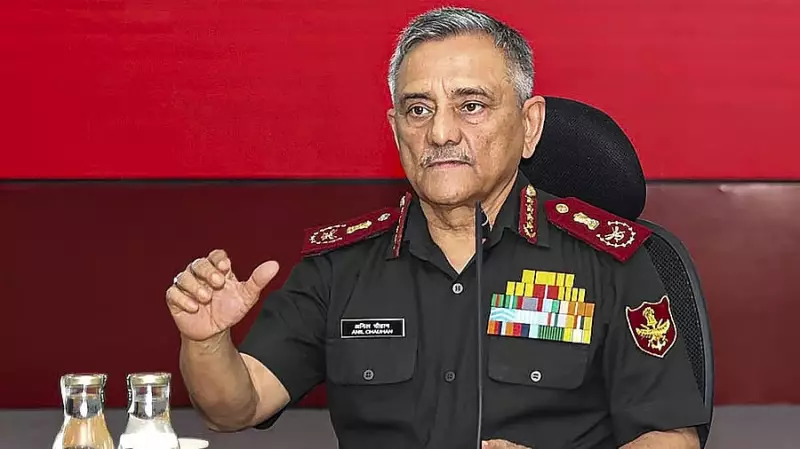
India's top military commander has issued a clarion call for the nation to bolster its defence readiness for potential conflicts of all scales and durations. Chief of Defence Staff (CDS) General Anil Chauhan emphasized that the country must be prepared to fight both short and protracted wars, pointing to persistent threats like terrorism and unresolved territorial disputes.
The Imperative for Multi-Spectrum Readiness
In a significant address, CDS General Anil Chauhan outlined the complex security landscape facing India. He stressed that the nature of modern threats demands a flexible and robust military posture. The general specifically highlighted the dual challenges posed by cross-border terrorism and ongoing land disputes with neighbouring countries as primary reasons for this heightened state of alert. His statement, made on 22 December 2025, underscores a strategic shift towards comprehensive preparedness.
Exploiting New Domains and Asymmetric Advantages
General Chauhan elaborated on the need for India to innovate in its defence strategy. A key part of his vision involves exploiting new domains of warfare, which include cyber, space, and information realms. Furthermore, he articulated the critical need to create asymmetry when facing a conventionally weaker adversary. This means developing capabilities that provide a decisive edge.

However, the CDS issued a crucial caveat. He warned that while building these asymmetric advantages, India must be vigilant to ensure that other, potentially more powerful nations do not exploit these very gaps or new vulnerabilities. This delicate balance requires constant technological advancement, strategic foresight, and diplomatic acumen.
Strategic Implications and the Road Ahead
The remarks from the country's senior-most military officer carry profound implications for India's defence planning, budgeting, and force structuring. Preparing for a long-duration war necessitates robust logistics, resilient supply chains, and significant stockpiling of munitions and spare parts. Conversely, readiness for a short, intense conflict demands rapid mobilization, high-impact precision weapons, and seamless integration between the three services.
This directive is likely to accelerate ongoing initiatives such as:
- Greater integration and jointmanship among the Army, Navy, and Air Force.
- Increased focus on indigenisation through initiatives like 'Make in India' for defence.
- Strategic investments in cutting-edge technology, including artificial intelligence, drone swarms, and cyber defence systems.
General Chauhan's analysis reflects a clear-eyed assessment of regional tensions, particularly with neighbours like Pakistan and China. The reference to land disputes directly alludes to the ongoing border standoffs, while the mention of terror aligns with the persistent threat of militancy. His message is unequivocal: complacency is not an option, and India's security architecture must evolve to meet diverse and simultaneous challenges.