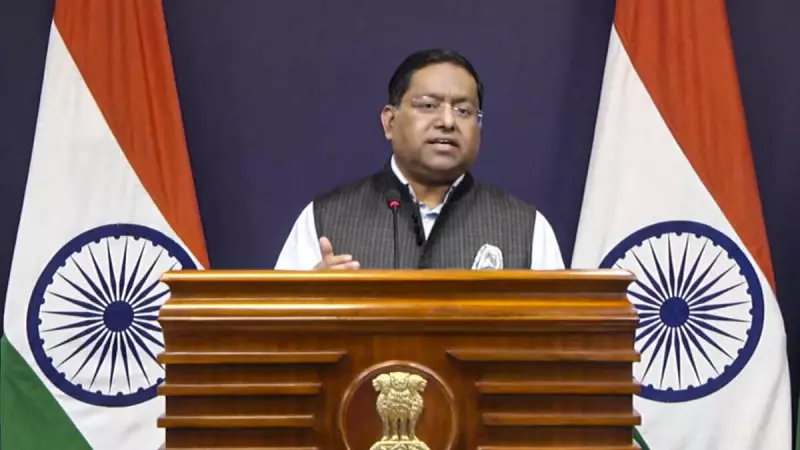
The Ministry of External Affairs (MEA) has officially responded to former US President Donald Trump's recent proposal to impose a massive 500% tariff on purchases of Russian oil. The statement, issued on Friday, January 9, 2026, indicates that New Delhi is monitoring the developments closely while firmly reiterating the principles guiding its energy imports.
India's Stance on Energy Procurement
In its response, the MEA underscored that India's approach to sourcing energy is fundamentally pragmatic and dictated by essential economic and security considerations. The ministry emphasized that the nation's energy procurement strategies are strictly guided by market dynamics. This approach is not a matter of choice but a necessary policy to fulfill the primary objective of ensuring the energy security of its people.
The statement serves as a clear articulation of India's position, balancing diplomatic awareness with a steadfast commitment to its domestic needs. It acknowledges the proposed policy shift from a key global partner while firmly anchoring its own actions in the reality of its substantial energy requirements.

Navigating Global Energy Markets
The context of Trump's proposal adds a significant layer of complexity to global energy trade and geopolitics. A tariff of 500% would effectively block most imports of Russian crude oil into countries that might consider such purchases. For India, which has significantly increased its intake of discounted Russian oil following the Ukraine conflict, this presents a potential future challenge.
However, the MEA's carefully worded statement reflects a strategy of strategic autonomy. It avoids direct confrontation or commentary on the US proposal itself but makes India's guiding principles unmistakably clear. The focus remains on stable, affordable energy supplies for the Indian economy, a non-negotiable pillar of the country's growth and stability.
Implications and the Road Ahead
The development highlights the delicate diplomatic tightrope India often walks in the contemporary global order. Maintaining strong ties with the United States while safeguarding its own economic interests, particularly in energy, requires nuanced statecraft. The MEA's "closely following" remark indicates a wait-and-watch posture, suggesting official policy will be formulated based on how the situation concretizes, especially if Trump returns to power.
Experts suggest that India's energy diplomacy will continue to prioritize diversification and cost-efficiency. The statement from January 9 reinforces that any external policy pressures will be weighed against the imperative of domestic energy security and market-driven economics. The coming months may see intensified diplomatic discussions as all parties assess the practical ramifications of such a drastic tariff proposal on global oil flows and bilateral relations.