

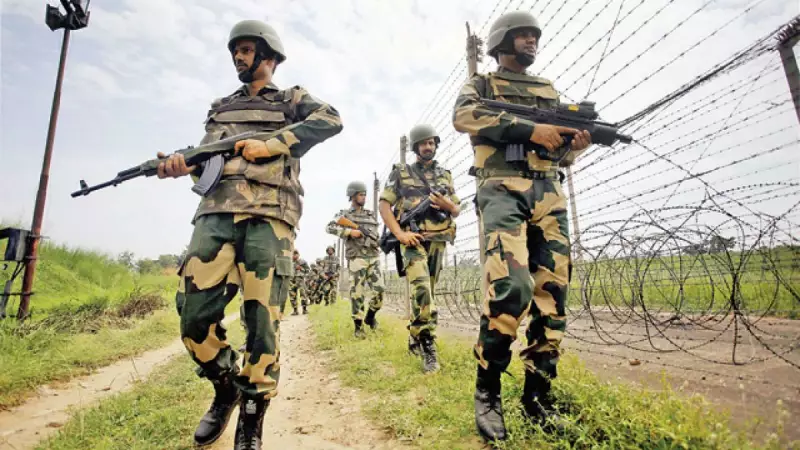
Indian security forces have issued a strong rebuttal to allegations made by Bangladesh, which claimed that the assailants responsible for the murder of a former Bangladeshi Member of Parliament had crossed into Indian territory. The Border Security Force (BSF) and the Meghalaya Police have jointly dismissed these claims as "misleading" and "baseless."
Bangladesh's Allegations and India's Firm Denial
The controversy stems from the killing of former Bangladeshi MP Anwarul Azim Anar, also known as Hadi, in Kolkata in May 2024. In a recent statement, Bangladeshi authorities suggested that the individuals involved in this crime had managed to flee across the border into the Indian state of Meghalaya following the incident.
However, Indian officials have provided a detailed counter to this narrative. A senior BSF official stated that there is no evidence or intelligence to support the claim that the perpetrators entered India after the crime. The official emphasized that the border is under constant surveillance and such a crossing would not go unnoticed.

Detailed Account from Security Forces
Providing a clearer timeline of events, the Meghalaya Police clarified the sequence of movements related to the case. They confirmed that the primary suspect in the murder, Jihad Howladar, was indeed apprehended. However, his arrest did not occur under the circumstances alleged by Bangladesh.
Police officials explained that Howladar was detained in Meghalaya's East Jaintia Hills district on December 24, 2024. Crucially, they asserted that he was already present within India at the time of the murder in Kolkata and did not cross the border from Bangladesh afterward. This directly contradicts the core of Bangladesh's claim that the killers fled into India post-crime.
Furthermore, security forces highlighted their ongoing cooperation. "The BSF and Meghalaya Police are working in close coordination," an official noted, adding that all standard operating procedures for border management and intelligence sharing are being rigorously followed.
Implications for Bilateral Relations and Security
This public disagreement over a high-profile criminal case touches on sensitive issues of border security and bilateral trust between India and Bangladesh. Indian authorities have expressed concern that such "misleading" allegations could unnecessarily strain the cooperative relationship between the security agencies of the two neighboring nations.
The firm denial serves to uphold the integrity of India's border security apparatus. By stating that the border is effectively monitored, the BSF aims to reassure the public and the international community about the robustness of its mechanisms. The officials underscored that making unverified claims can hamper joint efforts to combat trans-border crime.
The case of Anwarul Azim Anar's murder remains a complex investigation spanning two countries. While India has rejected the specific claim about the killers' entry, it acknowledges the broader context of the crime. The emphasis from Indian security forces is now on fact-based collaboration to ensure justice is served, without letting unsubstantiated allegations derail the process or damage diplomatic ties.






