India Rejects Chinese Claims on Shaksgam Valley
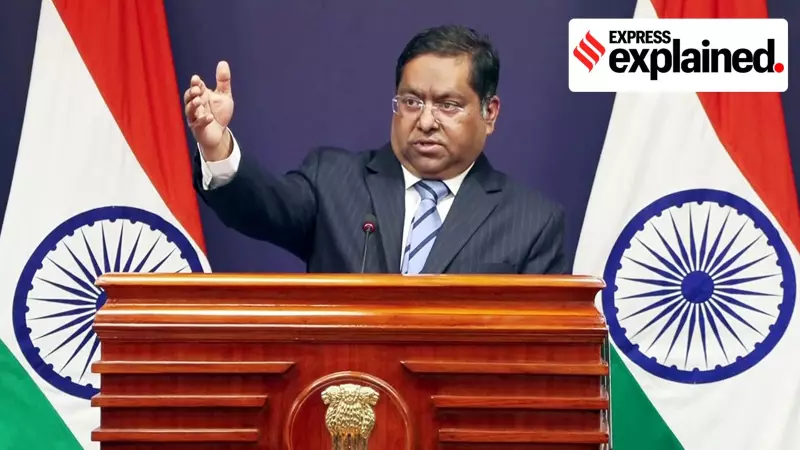
The Ministry of External Affairs spokesperson Randhir Jaiswal has strongly rejected recent Chinese assertions regarding the Shaksgam Valley. During a media briefing in New Delhi, Jaiswal made India's position crystal clear.
"Shaksgam Valley is Indian territory," Jaiswal stated emphatically. "We have never recognised the so-called China-Pakistan boundary agreement that happened in 1963."
He added that India consistently maintains the agreement is both illegal and invalid. The spokesperson also rejected the China-Pakistan Economic Corridor, which passes through territory India considers under Pakistan's illegal occupation.

Chinese Spokesperson's Statement
Chinese Foreign Ministry spokesperson Mao Ning addressed the issue earlier this week. She defended China's right to conduct infrastructure construction on what she called Chinese territory.
"It's fully justified for China to conduct infrastructure construction on its own territory," Mao Ning told reporters. She referenced the 1960s boundary agreement between China and Pakistan, calling it the right of both sovereign countries.
Historical Background of the Dispute
The Shaksgam Valley, also known as the Trans Karakoram Tract, covers more than 5,000 square kilometers. This rugged territory lies north of the Siachen glacier in the Hunza-Gilgit region.
Pakistan controlled the area before ceding it to China through the 1963 agreement. India has consistently protested this arrangement for decades.
Prime Minister Jawaharlal Nehru addressed Parliament about the matter back in 1963. He expressed concern that the China-Pakistan agreement was timed to prejudice talks between India and Pakistan.
The 1963 Agreement Details
The boundary agreement emerged during a period of deepening China-Pakistan relations. This occurred shortly after the 1962 India-China war.
Article 6 of the agreement contained an interesting provision. It stated that after settlement of the Kashmir dispute, the sovereign authority would reopen boundary negotiations with China.
Former CIA official Bruce Riedel has analyzed this period. He noted that despite India's sense of betrayal, Kashmir talks continued for six sessions before ultimately collapsing.
Recent Government Statements
In 2022, then Minister of State V Muraleedharan provided detailed information to the Lok Sabha. He stated China continues to occupy approximately 38,000 square kilometers of Indian territory in Ladakh.
Regarding Shaksgam Valley specifically, Muraleedharan said Pakistan illegally ceded 5,180 square kilometers to China through the 1963 agreement.
The government has repeatedly conveyed to both Pakistan and China that Jammu & Kashmir and Ladakh remain integral parts of India.
CPEC Connection
Shaksgam Valley has gained renewed importance due to its proximity to the China-Pakistan Economic Corridor. This massive infrastructure project, launched in 2015, aims to connect Gwadar port with Kashgar in Xinjiang.
India objects strongly to CPEC because its route passes through Pakistan-occupied Kashmir. New Delhi considers this a violation of India's sovereignty and territorial integrity.
Chinese investments in CPEC projects exceed $62 million, though implementation has faced numerous challenges including security concerns and Pakistan's economic difficulties.
India's Consistent Position
Jaiswal reiterated India's longstanding position during his briefing. "The entire union territories of Jammu and Kashmir and Ladakh are an integral and inalienable part of India," he stated.
The spokesperson confirmed India has consistently protested Chinese attempts to alter ground realities in Shaksgam Valley. He also reserved India's right to take necessary measures to safeguard national interests.
This firm stance reflects India's determination to protect its territorial claims despite competing assertions from neighboring countries.