

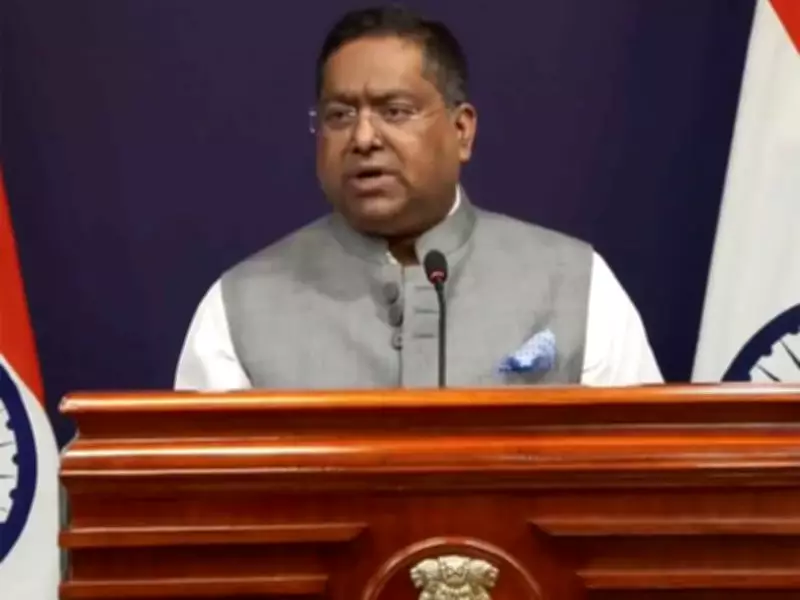
India Rejects Pakistan's Statement on Nuclear Deal with Canada
India's Ministry of External Affairs (MEA) has issued a strong rebuttal to Pakistan's recent statement regarding the nuclear cooperation agreement between India and Canada. The MEA emphasized that India's non-proliferation record is impeccable and has been consistently acknowledged by the international community.
Pakistan's Criticism and India's Response
Pakistan had raised concerns about the India-Canada nuclear deal, questioning its implications for regional stability. In response, the MEA categorically dismissed these remarks, stating that Pakistan's comments are unfounded and reflect a misunderstanding of India's commitment to global non-proliferation norms.
The MEA highlighted that India has a long-standing and proven track record in adhering to international non-proliferation standards. This includes strict compliance with agreements such as the Nuclear Non-Proliferation Treaty (NPT) framework, even though India is not a signatory, and active participation in global efforts to prevent the spread of nuclear weapons.

Details of the India-Canada Nuclear Agreement
The nuclear deal between India and Canada, which was recently finalized, aims to enhance cooperation in civil nuclear energy. This agreement is part of India's broader strategy to secure its energy needs through peaceful nuclear programs, supported by partnerships with countries like the United States, France, and now Canada.
Key aspects of the deal include:
- Technology transfer for nuclear power generation.
- Collaboration on nuclear safety and security measures.
- Joint research initiatives in advanced nuclear technologies.
The MEA underscored that this cooperation is strictly for civilian purposes and aligns with India's energy security goals, contributing to sustainable development without compromising non-proliferation commitments.
India's Non-Proliferation Credentials
India's non-proliferation credentials have been lauded by various international bodies and nations. The MEA pointed out that India has maintained a responsible stance on nuclear issues, including:
- Implementing robust export controls to prevent nuclear technology misuse.
- Participating in international forums like the Nuclear Suppliers Group (NSG).
- Adhering to a voluntary moratorium on nuclear testing since 1998.
These efforts have earned India recognition as a responsible nuclear state, with its policies often cited as a model for other countries. The MEA reiterated that Pakistan's criticism is baseless and does not reflect the reality of India's contributions to global non-proliferation efforts.
Regional and Global Implications
The MEA's rejection of Pakistan's statement comes amid ongoing diplomatic tensions in the region. By reaffirming India's impeccable non-proliferation record, the MEA aims to reinforce trust in India's international partnerships, particularly with countries like Canada.
This development highlights the importance of factual discourse in international relations, as India continues to pursue energy security through lawful and transparent means. The nuclear deal with Canada is expected to bolster India's energy infrastructure, supporting economic growth while upholding global non-proliferation standards.
In conclusion, the MEA's firm stance serves as a reminder of India's unwavering commitment to peace and security, dismissing unfounded allegations and focusing on constructive international cooperation.






