

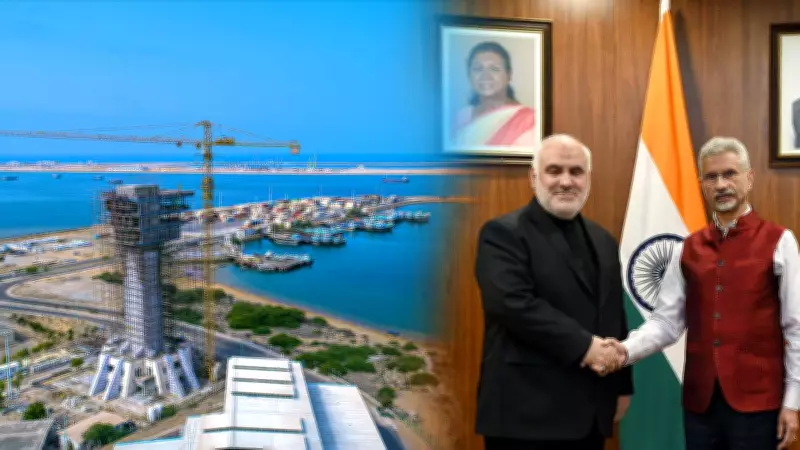
India Seeks US Sanctions Waiver For Chabahar Port Amid Iran Conflict
The future of India's strategic Chabahar Port project has become entangled in complex international diplomacy, with New Delhi actively negotiating a fresh sanctions waiver from the United States amid escalating tensions between Washington and Tehran. This critical infrastructure project, which has long served as a vital connectivity corridor for Afghanistan, now faces uncertainty as diplomatic pressures intensify across the region.
High-Stakes Diplomatic Balancing Act
India finds itself navigating a delicate diplomatic tightrope, balancing its strategic interests in maintaining the Chabahar Port's operations while preserving crucial relationships with both the United States and Iran. The port has historically operated under a special exemption from US sanctions due to its recognized importance for Afghanistan's economic and humanitarian connectivity. However, with the current waiver deadline rapidly approaching, Indian officials are engaged in intensive negotiations to secure continued operational permissions.
The Chabahar Port represents far more than just maritime infrastructure for India - it serves as a critical gateway to Central Asia and Afghanistan, bypassing traditional routes through Pakistan. This strategic positioning has made the port an essential component of India's regional foreign policy and economic outreach initiatives.

Iranian Envoy Signals Post-Conflict Revival
Amid these complex negotiations, Iran's envoy to India has hinted at significant port revival plans that could be implemented once current regional conflicts subside. This suggests that despite immediate challenges, both nations remain committed to the long-term development potential of the Chabahar project. The Iranian official's comments indicate that the port's strategic importance transcends current geopolitical tensions and remains a priority for bilateral cooperation.
The timing of these diplomatic maneuvers coincides with broader regional instability, making the Chabahar negotiations particularly sensitive. India must carefully weigh multiple factors including energy security considerations, regional stability concerns, and the evolving dynamics of US-Iran relations that directly impact the sanctions landscape.
Strategic Implications and Regional Connectivity
The Chabahar Port's significance extends beyond bilateral relations to encompass broader regional connectivity:
- Afghanistan Access: The port provides Afghanistan with crucial sea access, reducing its dependence on Pakistani routes
- Central Asia Gateway: Chabahar serves as India's primary gateway to resource-rich Central Asian nations
- Trade Corridor: The port facilitates the International North-South Transport Corridor connecting India to Russia via Iran
- Humanitarian Channel: During Afghanistan's humanitarian crises, Chabahar has served as a vital supply route
As negotiations continue, Indian diplomats are emphasizing the port's role in regional stability and humanitarian assistance, arguments that have previously secured US understanding despite broader sanctions against Iran. The outcome of these discussions will significantly impact India's strategic positioning in West Asia and its ability to maintain independent foreign policy decisions amid great power competition.
The coming weeks will prove crucial as India works to preserve this strategic asset while navigating the complex web of international sanctions and regional conflicts that threaten to undermine years of infrastructure investment and diplomatic effort.






