

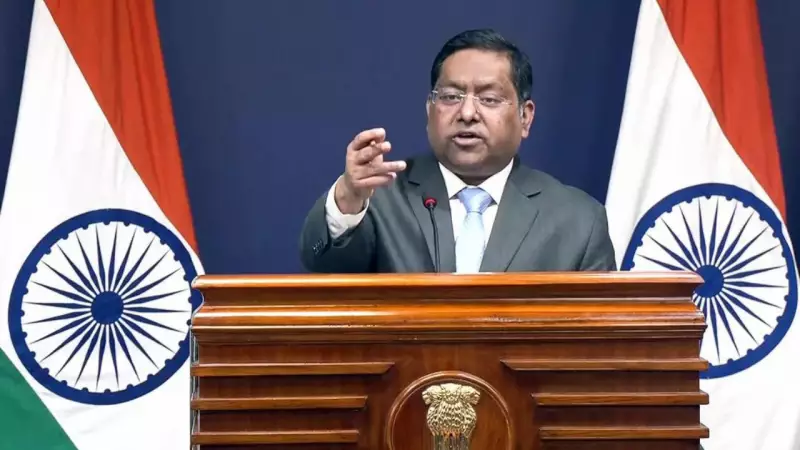
In a sharp diplomatic rebuttal, India on Monday categorically rejected Pakistan's allegations regarding the treatment of religious minorities within its borders. The Ministry of External Affairs (MEA) dismissed the charges as a "finger pointing" exercise, turning the focus back on Islamabad's own "abysmal" track record on the issue.
MEA's Strong Rejection and Counter-Charge
The MEA issued a formal statement responding to remarks made by Pakistani foreign affairs spokesperson Tahir Andrabi. Andrabi had reportedly called upon the international community to take note of recent incidents in India involving religious minorities, including Christmas-related vandalism and attacks on Muslims.
The Indian ministry's response was unequivocal. "We reject the reported remarks from a country whose abysmal record on this front speaks for itself," the MEA declared. The statement further emphasized that "Pakistan’s horrific and systemic victimisation of minorities of various faiths is a well established fact." It concluded with a firm assertion that "No amount of finger pointing will obfuscate it."

What Pakistan Alleged
According to a report by ARY News, Pakistani spokesperson Tahir Andrabi highlighted specific incidents to bolster his appeal. He mentioned cases of "Christmas vandalism" and what he described as "state-backed campaigns targeting Muslims." His allegations included references to demolitions of homes and repeated lynching cases.
Andrabi specifically cited the high-profile 2015 case of Muhammad Akhlaq, who was lynched in Uttar Pradesh over rumours of cow slaughter. The Pakistani official claimed that Indian authorities had "shielded the perpetrators from accountability" in this and other instances.
A Long-Standing Point of Contention
This exchange is the latest in a series of diplomatic spats where India and Pakistan have accused each other of human rights violations and mistreatment of minority communities. India has consistently maintained that Pakistan, where blasphemy laws are stringent and incidents of violence against Hindu, Christian, and Ahmadiyya communities are frequently reported, lacks the moral authority to comment on India's internal affairs.
The MEA's statement reflects a policy of aggressively countering such criticisms from Pakistan, often by redirecting attention to the situation across the border. The use of the term "systemic victimisation" in India's response underscores its attempt to frame the issue in Pakistan as institutional rather than incidental.
This diplomatic row highlights how issues of minority rights and religious freedom continue to be potent tools in the fraught relationship between the two neighbouring nations, often used to challenge each other's international standing and governance records.






