

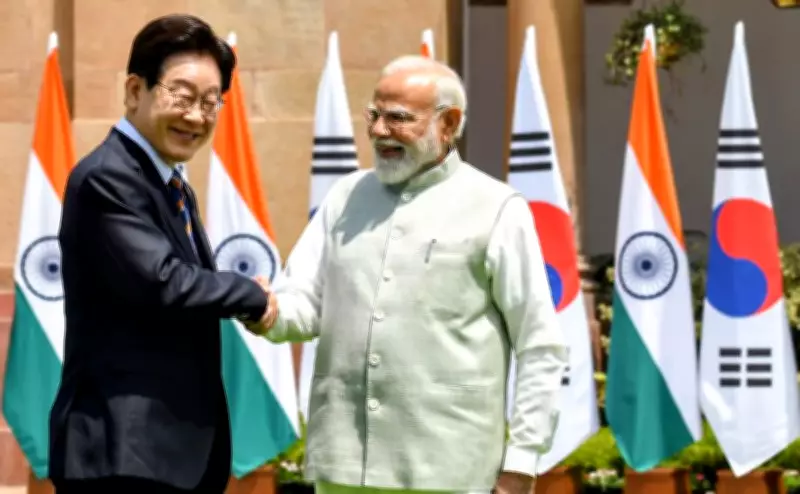
India and South Korea Set to Begin Talks for Upgraded Economic Partnership Agreement
In a significant move to strengthen bilateral economic relations, India and South Korea have jointly decided to commence negotiations aimed at upgrading their existing Comprehensive Economic Partnership Agreement (CEPA). This decision marks a pivotal step towards enhancing trade and investment flows between the two nations, addressing contemporary trade barriers, and fostering deeper economic integration.
Background and Objectives of the CEPA Upgrade
The current CEPA, which has been in effect since 2010, has facilitated substantial growth in bilateral trade, but both countries recognize the need for modernization to align with evolving global economic dynamics. The upgrade negotiations are expected to focus on several key areas, including:
- Expansion of Tariff Reductions: Broadening the scope of goods and services covered under preferential tariffs to boost market access.
- Digital Trade and E-commerce: Incorporating provisions for digital economy sectors to support innovation and cross-border data flows.
- Investment Facilitation: Enhancing protections and incentives for investors to encourage more robust capital movements.
- Sustainable Development: Integrating environmental and labor standards to promote responsible trade practices.
Officials from both sides have emphasized that this upgrade aims to not only increase bilateral trade volumes but also to create a more resilient and future-proof economic partnership. By addressing issues such as non-tariff barriers and supply chain disruptions, the revised pact is poised to benefit industries ranging from automotive and electronics to pharmaceuticals and information technology.

Implications for Bilateral Trade and Global Economy
The decision to upgrade the CEPA comes at a time when both India and South Korea are seeking to diversify their economic partnerships and reduce dependencies on single markets. South Korea is a major investor in India, with significant presence in sectors like automobiles, steel, and consumer electronics, while India offers a vast market and growing manufacturing base under initiatives like Make in India.
Economists predict that an enhanced CEPA could lead to a substantial increase in bilateral trade, which currently stands at over $20 billion annually. Key benefits anticipated include:
- Boost to Exports: Indian exporters may gain better access to South Korean markets for agricultural products, textiles, and IT services.
- Technology Transfer: Collaboration in advanced technologies such as semiconductors, renewable energy, and artificial intelligence could accelerate.
- Job Creation: Increased investment flows are likely to generate employment opportunities in both countries.
Moreover, this move aligns with India's broader strategy to forge stronger trade ties with East Asian nations, as seen in recent agreements with countries like Japan and Australia. For South Korea, it represents an opportunity to deepen engagement with one of the world's fastest-growing major economies.
Next Steps and Timeline for Negotiations
Both governments have agreed to establish working groups to draft the negotiation framework, with the first round of talks expected to commence in the coming months. The process is anticipated to be complex, given the need to balance diverse economic interests and regulatory standards.
Stakeholders from industry bodies and trade associations in both nations have welcomed the decision, urging for a swift and mutually beneficial outcome. As negotiations progress, regular consultations will be held to ensure transparency and address concerns from various sectors.
In conclusion, the decision to upgrade the India-South Korea CEPA underscores a shared commitment to fostering a dynamic and inclusive economic partnership. By modernizing their trade pact, both countries aim to not only enhance bilateral prosperity but also contribute to stability and growth in the Indo-Pacific region.






