India Launches Diplomatic Push to Recover $600 Million in Stuck ONGC Dividends from Venezuela
In a significant diplomatic and economic development, the Indian government has initiated high-level trilateral talks with the United States and Venezuela to resolve the long-standing issue of approximately $600 million in dividends belonging to ONGC Videsh Ltd (OVL) that have been stranded in Venezuela for years. According to sources familiar with the matter, these government-to-government (G2G) discussions aim to unlock funds that have been blocked due to a combination of US sanctions and production losses in Venezuela's oil sector.
Background of the Stalled Payments and Sanctions Impact
The financial impasse traces back to OVL's 40% stake in the San Cristobal Project in Venezuela, acquired in 2008, with the remaining 60% held by the state-owned Petróleos de Venezuela SA (PDVSA). The dividends have been pending since the era of late President Hugo Chávez, when PDVSA's revenues were redirected to fund social programs. The situation worsened with subsequent US sanctions, which severely curtailed production at San Cristobal and explicitly blocked the repatriation of dividends to foreign entities like OVL.
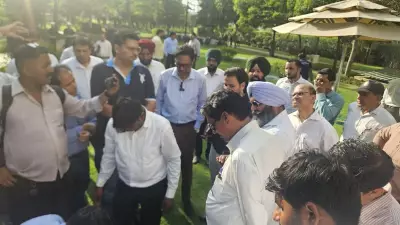
"G2G talks are underway between the three countries. So far, no conclusion has been reached, but it is expected that things will move fast," revealed one anonymous source. A PDVSA delegation is currently in India, reportedly to discuss this issue on the sidelines of the ongoing India Energy Week, highlighting the urgency and diplomatic priority accorded to the matter.

Strategic and Economic Implications for India's Energy Security
The outcome of these negotiations carries substantial weight for India's energy and economic landscape. A successful resolution would not only allow OVL to recover its long-stuck overseas earnings but could also revive India's access to Venezuela's vast oil reserves, one of the largest in the world. This is particularly crucial for India, the world's third-largest oil consumer, which imports between 88% and 90% of its crude oil needs.
Analysts note that any potential easing of sanctions and reopening of Venezuela's crude sector could introduce additional supply into global markets. However, Venezuelan crude is known for its high viscosity, making it challenging to refine. This quality issue might force sellers to offer discounted prices to large buyers like India. Given that a mere $1 per barrel reduction in crude prices can lower India's import bill by approximately ₹13,000 crore, securing favorable terms for Venezuelan oil could translate into significant economic savings.
Expert Skepticism and Historical Context of Investments
Despite the ongoing talks, strategic experts remain cautious about a swift or favorable outcome. "Given some of the recent commentary of US top officials and the US president, I don't see very fair treatment with India with regard to Venezuela," commented C. Uday Bhaskar, Director of the Society for Policy Studies. This skepticism is rooted in the complex geopolitical dynamics, including recent US military actions in Caracas and executive orders aimed at controlling Venezuelan oil revenues.
Indian public sector undertakings, including OVL, Indian Oil Corp. Ltd, and Oil India Ltd, had collectively invested around $2.5 billion in Venezuela before the imposition of sanctions in 2020. The Carabobo-1 project, another joint venture, has also seen its output affected by these sanctions. Previous Indian efforts to secure sanctions waivers or negotiate oil-for-dividend swaps have not yielded results, underscoring the diplomatic complexity of the current initiative.
Current Trade Dynamics and Market Hesitancy
India's trade with Venezuela has dwindled significantly in recent years. In FY25, total imports from Venezuela stood at $364.5 million, with crude oil accounting for $255.3 million—an 81.3% decline from the $1.4 billion in crude imports recorded in FY24. Exports to Venezuela were limited to $95.3 million, primarily comprising pharmaceuticals worth $41.4 million.

Market response to potential Venezuelan crude imports remains tepid. "While traders may be offering barrels to Indian refiners, the market response remains hesitant due to quality complexity and the commercial challenge of making Venezuelan crude work at current price levels," explained Sumit Ritolia, Lead Research Analyst for Refining and Modelling at Kpler. This commercial hesitation adds another layer of challenge to the diplomatic negotiations.
As the trilateral talks progress, the Indian ministries of external affairs and petroleum and natural gas, along with OVL, PDVSA, and the US and Venezuelan embassies in New Delhi, have not yet responded to official queries on the matter. The resolution of this $600 million dividend issue stands as a critical test of diplomatic negotiation, with potential ripple effects on global oil markets and India's strategic energy procurement.