

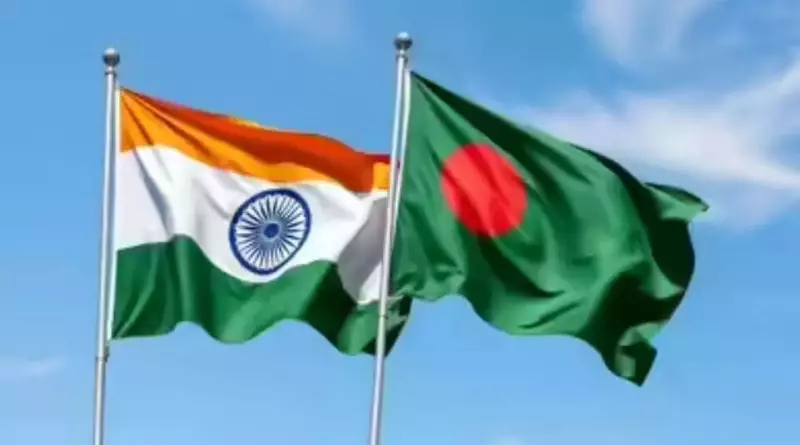
India has officially summoned Bangladesh's High Commissioner to New Delhi, Riaz Hamidullah, to convey serious apprehensions regarding a worsening security climate in its neighboring country. The move came on Wednesday amid specific threats directed at the Indian diplomatic mission in Dhaka.
Diplomatic Demarche Over Extremist Threats
The Ministry of External Affairs (MEA) stated that it had registered strong concerns about the deteriorating security environment in Bangladesh. Officials highlighted that India's attention was specifically drawn to the activities of certain extremist factions. These groups have publicly declared intentions to create a security crisis around the Indian High Commission in Dhaka.
In its statement, the Indian government firmly rejected what it termed a false narrative being propagated by these extremist elements concerning recent events in Bangladesh. The MEA expressed disappointment, noting that the interim government in Dhaka had not conducted a thorough investigation nor shared substantial evidence with India regarding these incidents.

Protests and Heightened Security in Dhaka
Parallel to the diplomatic exchange in New Delhi, the streets of Dhaka witnessed significant unrest. Hundreds of demonstrators, organized under the banner "July Oikya" (July Unity), initiated a march towards the Indian High Commission on Wednesday afternoon. The protesters chanted anti-India slogans and presented a list of demands, which included preventing what they called "anti-Bangladesh conspiracies" and facilitating the return of former Prime Minister Sheikh Hasina.
Sheikh Hasina had left Bangladesh last year following the widespread "July Uprising" against her administration. In response to the protest march, Bangladeshi authorities intervened to stop the procession and bolstered security measures around the diplomatic compound. Earlier in the day, the Indian Visa Application Centre in Dhaka suspended its operations for the afternoon due to the prevailing security situation.
India's Expectations and Bangladesh's Response
During the meeting with High Commissioner Hamidullah, Indian officials underscored that they expect the interim government in Bangladesh to fulfill its diplomatic obligations. This includes ensuring the complete safety and security of Indian missions and personnel stationed in the country. India reiterated its long-standing and friendly ties with the people of Bangladesh, bonds forged during the liberation struggle and strengthened through ongoing developmental and cultural exchanges.
The MEA reaffirmed India's stance in favor of peace and stability in Bangladesh, consistently advocating for "free, fair, inclusive, and credible polls conducted in a peaceful atmosphere."
Reacting to the summons, Bangladesh's Foreign Adviser, Touhid Hossain, described it as a routine diplomatic practice. He pointed out that the Indian High Commissioner in Dhaka had also been summoned a few days prior. Hossain acknowledged that tensions with India have persisted since the interim government took charge but stated efforts are underway to build a constructive working relationship.
He also addressed India's comments on elections, asserting that Bangladesh does not require advice on how to conduct its polls. Hossain emphasized the government's commitment to holding a free and fair election, adding a pointed remark that India did not issue similar calls for fair elections during Sheikh Hasina's 15-year tenure.






