India's Quiet Exit from Strategic Central Asian Airbase
In a significant geopolitical development that remained under wraps for years, India has completely withdrawn from the Ayni airbase in Tajikistan, marking the end of its only full-fledged overseas military presence. The withdrawal, which began quietly in 2022, represents a major shift in India's strategic positioning in Central Asia.
The matter came to public attention only last month, revealing that India had been gradually pulling out its military personnel and equipment from the facility it had painstakingly built and maintained for two decades. The airbase had served as India's strategic foothold in a region dominated by global powers like Russia and China.
The Strategic Importance of Ayni Airbase
The Ayni airbase held exceptional strategic value for India due to its location approximately 20 kilometers from Afghanistan's Wakhan Corridor. This narrow strip of land shares boundaries with Pakistan-occupied Kashmir and China's Xinjiang province, making it a crucial observation point for regional security dynamics.

India first established military presence at Ayni while supporting the Northern Alliance in Afghanistan during their conflict with the Taliban. The base later proved instrumental during the evacuation of Indian nationals following the Taliban's takeover of Kabul in August 2021.
Originally constructed during the Soviet era, the airbase had fallen into disrepair after the Soviet Union's collapse. Under a 2002 bilateral agreement with Tajikistan, India invested approximately $80 million to completely renovate the facility. The comprehensive upgrade included extending the runway to 3,200 meters to accommodate combat jets and heavy transport aircraft, along with constructing hangars, fuel depots, and modern air traffic control facilities.
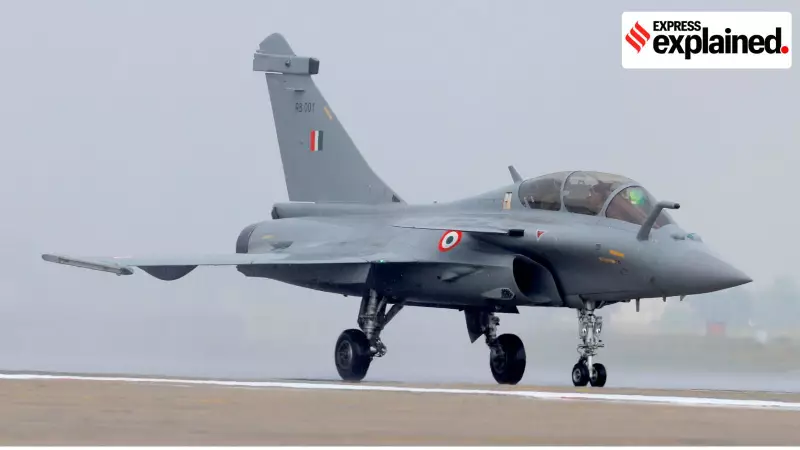
The Border Roads Organisation played a crucial role in executing these renovations. At its peak operational capacity, the base hosted around 200 Indian military personnel from the Army and Indian Air Force, along with several Sukhoi 30 MKI fighter jets.
Reasons Behind the Withdrawal
Official sources indicate that India's bilateral arrangement with Tajikistan for the rehabilitation and development of the aerodrome concluded naturally in 2022, leading to the facility being handed over to Tajik authorities. However, geopolitical analysts suggest that pressure from Russia and China likely influenced Tajikistan's decision not to renew the lease agreement.
The withdrawal process was conducted discreetly over an extended period, with the complete scale of the pullout becoming apparent only recently. This low-profile approach reflects the sensitive nature of military diplomacy in the strategically vital Central Asian region.
Strategic Implications for India
The loss of Ayni airbase represents a significant setback for India's long-term strategic interests in Central Asia. As India's only operational overseas military base, Ayni provided crucial access not only to Tajikistan but to the entire Central Asian region.
The proximity to Wakhan Corridor was particularly valuable from a geopolitical perspective. This corridor is of substantial interest to both China and Pakistan for security considerations and potential trade routes. The base effectively filled critical security and intelligence gaps for India in a region where it has been seeking to expand influence.
Beyond the immediate strategic advantages, India had invested substantial resources—both financial and human—over two decades to develop and maintain the facility. The withdrawal potentially diminishes India's leverage vis-à-vis Pakistan and reduces its ability to project influence in a region increasingly dominated by Chinese and Russian interests.
India's Other Overseas Military Presence
While India no longer maintains a full-fledged overseas military base, it has been developing other strategic partnerships. In 2024, India and Mauritius jointly inaugurated an airstrip and jetty that India constructed on Agaléga islands in the western Indian Ocean.

These projects enhance India's maritime reach in the Indian Ocean and improve surveillance capabilities off Africa's east coast, where China has been expanding its influence. The upgraded airstrip on North Agaléga Island will enable operations of the Indian Navy's P8I maritime reconnaissance aircraft, in addition to the smaller Dornier aircraft.
India maintains a military training team in Bhutan responsible for training personnel of the Royal Bhutan Army and the Royal Bodyguard of Bhutan. Historically, India operated temporary military facilities in Bangladesh during the 1971 India-Pakistan war and in Sri Lanka during the Indian Peace Keeping Force mission.
This development occurs against the backdrop of China establishing an official overseas military base in Djibouti and suspected construction of additional facilities in Tajikistan, though Beijing has not officially acknowledged these developments. Meanwhile, the United States maintains over a hundred overseas military installations globally, highlighting the continued importance of forward military positioning in contemporary geopolitics.