

Indian Navy Engages in US-Led Exercise at Guam as Russian Warships Arrive at Visakhapatnam
In a display of strategic military diplomacy, India is simultaneously strengthening ties with both the United States and Russia through separate naval engagements. This dual approach underscores India's commitment to balancing its defense partnerships amid escalating global tensions.
Russian Warships Dock at Visakhapatnam for Cultural and Logistical Exchange
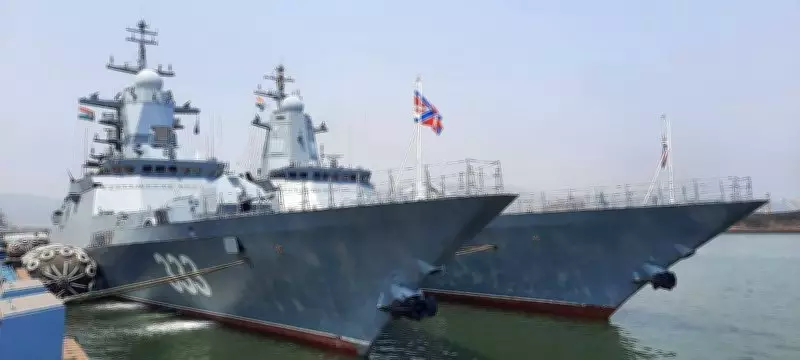
Two warships from Russia's Pacific Fleet, the Sovershenny and Rezky, arrived at the eastern port of Visakhapatnam on March 14. Based in Vladivostok, these vessels embarked on a long-distance Asia-Pacific deployment on February 12. During their stay, the crews will participate in cultural and sports events alongside Indian naval personnel, fostering camaraderie and cooperation. The Russian Embassy in India and Indian Navy representatives welcomed the ships, which will also restock supplies to required levels.
Indian Navy Participates in Sea Dragon 2026 Anti-Submarine Exercise in Guam
Meanwhile, at Andersen Air Force Base in Guam, a US territory in the western Pacific Ocean, the Indian Navy has joined the multinational anti-submarine maritime exercise 'Sea Dragon 2026'. Hosted by the United States, this drill includes participation from Japan, Australia, and New Zealand. Scheduled to run for nearly three weeks starting March 9, the exercise focuses on enhancing aircrew proficiency in anti-submarine warfare (ASW).

All five navies are deploying long-range maritime reconnaissance planes, primarily the Boeing P8 or its variants, capable of hunting submarines and generating a common maritime picture. These aircraft facilitate seamless communication among participants. According to a US Navy statement, Sea Dragon 2026 advances skills from simulated tracking to actual submarine detection and tracking, with crews engaging in over 200 cumulative hours of in-flight training and classroom sessions on planning and tactical coordination. This annual exercise has been held since 2019.
Geopolitical Context and India's Strategic Military Ties
These engagements occur against a backdrop of heightened global tensions, including conflicts in West Asia and the ongoing war in Ukraine. India recently sheltered an Iranian warship, IRIS Lavan, at Kochi, highlighting its nuanced diplomatic stance. Despite the US and NATO's disputes with Russia, India continues to refine military ties with both superpowers.
In November last year, India and the US discussed enhancing bilateral and multilateral exercises, aiming to add complexity such as submarine hunts and tracking enemy vessels to strengthen their maritime partnership in the Indo-Pacific. Both nations are also part of strategic multi-nation constructs like the Combined Maritime Forces (CMF), which operates in the Red Sea and Persian Gulf.
Furthermore, a joint statement from Prime Minister Narendra Modi and Russian President Vladimir Putin in December emphasized reorienting the six-decade-old India-Russia military ties toward co-development and co-production of advanced technology, aligning with the 'Make in India' initiative.
This dual engagement strategy demonstrates India's adept navigation of complex geopolitical landscapes, reinforcing its role as a key player in global maritime security and defense cooperation.






