

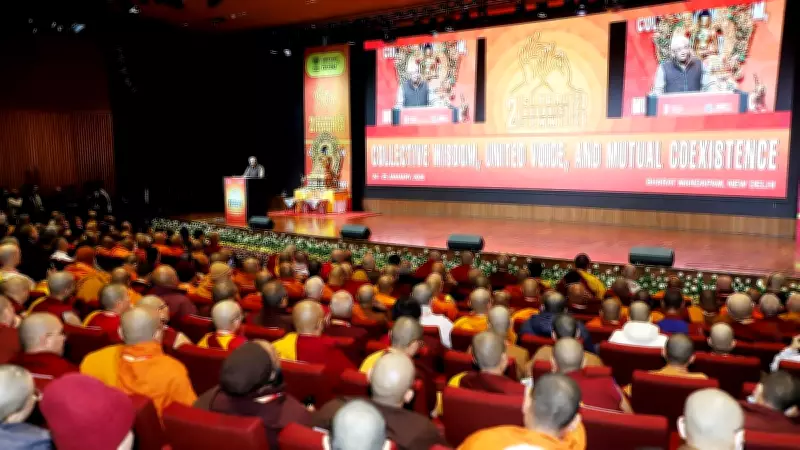
India's Buddhist Diplomacy: A Strategic Counter to China's Financial Influence
In the realm of international relations, India is increasingly harnessing its deep-rooted Buddhist heritage as a powerful tool of diplomacy, creating a unique contrast to China's approach, which often relies on substantial financial investments. This strategic move draws upon India's millennia-old ties to Buddhism and its global recognition as the sacred land where the Buddha lived and taught.
The Foundations of India's Buddhist Diplomacy
India's Buddhist diplomacy is not a recent innovation but is built on a foundation that spans thousands of years. As the birthplace of Buddhism, India holds a revered position in the hearts of millions of Buddhists worldwide. This cultural and spiritual connection provides India with a natural advantage in fostering international relationships, particularly in regions like Southeast Asia and East Asia where Buddhism has a significant presence.
By promoting Buddhist sites, organizing cultural exchanges, and supporting academic research on Buddhist philosophy, India strengthens its soft power. This approach emphasizes shared values, historical bonds, and mutual respect, which can lead to more sustainable and enduring partnerships compared to purely economic engagements.

China's Financial Strategy in Contrast
On the other hand, China has been utilizing its economic prowess to expand its influence globally. Through initiatives like the Belt and Road Initiative, China invests heavily in infrastructure and development projects in various countries, including those with Buddhist populations. While this financial approach can yield immediate gains and leverage, it sometimes faces criticism for creating debt dependencies and lacking deep cultural resonance.
China's efforts to promote Buddhism, such as building temples and hosting international Buddhist conferences, are often viewed through the lens of its broader geopolitical ambitions. This contrasts with India's more organic and historically grounded engagement, which is perceived as authentic and less politically motivated.
Global Implications and Future Prospects
The competition between India's Buddhist diplomacy and China's deep pockets highlights a broader trend in global diplomacy, where soft power and hard power are increasingly intertwined. India's strategy leverages its cultural assets to build trust and goodwill, potentially countering China's economic influence in key regions.
Looking ahead, India's focus on Buddhist diplomacy could enhance its role as a cultural leader and peacemaker in Asia. By emphasizing shared heritage and spiritual values, India aims to foster a sense of community and cooperation that transcends mere economic transactions. This approach not only reinforces India's position as the land of the Buddha but also positions it as a key player in shaping the cultural and diplomatic landscape of the 21st century.
In conclusion, while China may have deep pockets, India's deep roots in Buddhist tradition offer a compelling alternative in the arena of international relations. By balancing cultural diplomacy with strategic interests, India is carving out a niche that resonates with global audiences and strengthens its geopolitical standing.






