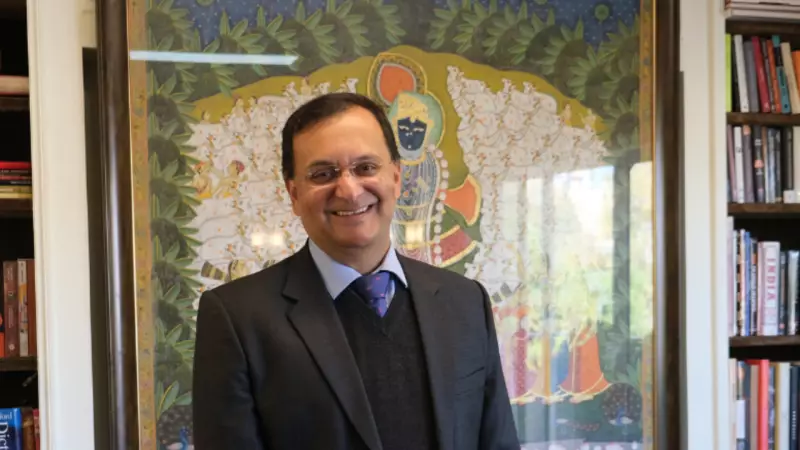
India's top diplomat in Canada has delivered a sharp public message to Ottawa. High Commissioner Dinesh Patnaik says Canada has ignored India's security warnings for decades. He argues this failure has allowed anti-India elements to operate freely on Canadian soil.
Diplomat Breaks Protocol with Blunt Language
Dinesh Patnaik serves as India's High Commissioner to Canada. He is New Delhi's senior-most diplomatic representative in Ottawa. His role involves managing the complex relationship between the two nations. He coordinates on political matters, security issues, and consular affairs.
Patnaik's recent comments stand out because diplomats usually choose their words carefully. They avoid blunt language during sensitive disputes. His direct tone signals India's growing frustration with Canadian policies.

Core of India's Complaint
Patnaik's stance reflects long-standing Indian concerns. India believes Canada has not acted decisively against individuals and groups. New Delhi links these elements to separatist extremism and anti-India activities.
India has repeatedly alleged that Canada permits such elements to organize freely. They can promote radical propaganda and sometimes issue threats. This continues even after formal diplomatic warnings from India.
From India's perspective, this is not merely a difference of opinion. It represents a genuine security challenge. Extremist messaging often targets Indian sovereignty. It also fuels tensions within diaspora communities in Canada.
Historical Tragedy Cited as Example
To underline his point, Patnaik referenced a historical tragedy. He mentioned the 1985 bombing of Air India Flight 182. That attack killed 329 people. Most victims were Canadians of Indian origin.
India views this case as a powerful example. It shows how terrorism linked to anti-India extremism was not met with firm accountability. The enormity of the tragedy affected Indian families deeply. It also impacted the wider diaspora community.
Recent Diplomatic Crisis
India-Canada ties deteriorated sharply in 2023. Ottawa alleged that Indian agents were involved in the killing of Khalistani separatist Hardeep Singh Nijjar. The incident occurred in British Columbia.
India rejected the claim outright. New Delhi described it as baseless. Indian officials repeatedly demanded credible evidence from Canada. The dispute spiraled into a wider diplomatic crisis.
Both sides adopted harder public positions. Trust between the two governments fell to a very low point. Diplomatic expulsions and travel advisories followed.
Broader Pattern of Concern
For India, the Nijjar dispute represents only one part of a larger concern. New Delhi argues Canada has been too permissive towards Khalistani-linked activities for years. The problem extends beyond free speech. It includes incidents of intimidation and security threats against Indian interests.
Patnaik's remarks signal India's effort to shift the spotlight. New Delhi wants to focus attention on what it sees as the core issue. That issue is Canada's perceived unwillingness to crack down on extremist networks targeting India.
Timing of the Remarks
Patnaik's comments arrive at a delicate moment. There are early signs of limited re-engagement between the two sides. Yet tensions remain exceptionally high. The remarks reflect New Delhi's broader strategic shift.
India is adopting a firmer public stance on terrorism-related issues. This is particularly true when they involve cross-border political activism and security risks. The diplomatic language is becoming less calibrated and more direct.
The High Commissioner plays a key role in raising concerns about extremist threats. He works to ensure the safety of Indian diplomats in Canada. He also engages extensively with the large Indian-origin community there. His blunt message underscores the seriousness with which India views the current situation.