The political landscape of Venezuela was thrown into unprecedented chaos following the dramatic capture of President Nicolas Maduro by US forces. The operation, which saw Maduro and his wife extracted from Caracas and brought to New York, has left a vacuum of power and a web of geopolitical uncertainties. In an exclusive analysis, former Indian Ambassador to Venezuela, Yashvardhan Kumar Sinha, who served from January 2007 to August 2009, unpacks the events for The Indian Express.
The Shock Capture and the Question of Control
Ambassador Sinha expressed surprise at the minimal resistance encountered during the operation, especially given the significant US naval presence in the Caribbean Sea that had been building for months. "The ease with which the special forces went in, extricated Maduro and his wife, and brought them to New York was striking," he noted, questioning the effectiveness of the Venezuelan military's alert status and their Chinese-supplied equipment.
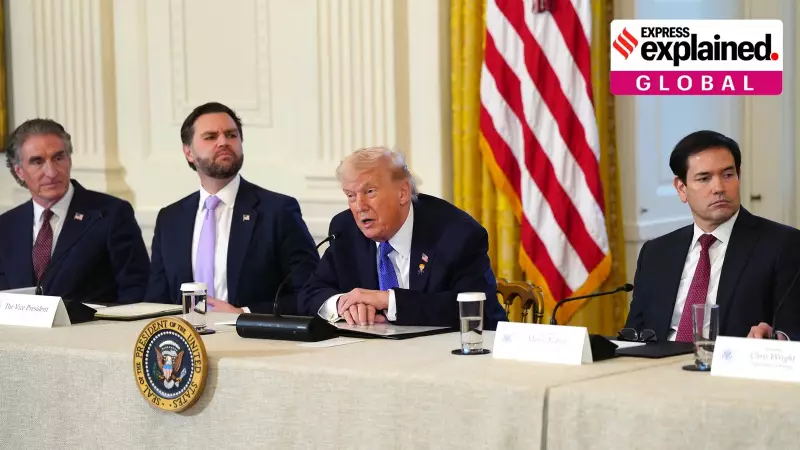
The immediate aftermath has been marked by profound confusion over who holds authority in Caracas. While US President Donald Trump initially suggested American officials would run the country, statements were later walked back. Attention has now shifted to Delcy Rodríguez, the vice president who has assumed the role of interim president. Sinha describes her as an experienced politician and trusted Maduro aide, making a potential deal with the US puzzling. "They now appear to be trying to do some deal with Delcy Rodríguez... I find it a bit confusing as to how she will serve American interests," he stated.

The situation is further complicated by the sidelining of opposition figures like Edmundo González and María Corina Machado. Sinha emphasizes that the ultimate arbiter may be the Venezuelan military, long-time backers of Maduro. "So it depends very much on which way the Venezuelan military goes... In the changed circumstances, we will have to watch what the Venezuelan military does."
Geopolitical Repercussions and a Crumbling Oil Economy
The unilateral American action, Sinha warns, sets a dangerous precedent and could embolden other nations, despite being a continuation of a long-standing US policy in Latin America. He is skeptical of the narcoterrorism charges against Maduro, pointing out that Venezuela is not a primary drug conduit to the US compared to Mexico or Colombia.
A central focus of the crisis is Venezuela's vast but crippled oil industry. Sinha traced its collapse to the nationalisation of PDVSA in 2007 under Hugo Chávez, which led to an exodus of American expertise and technology. "Because of the shortage of funds and a squeezed economy, Venezuela could not maintain its production and export levels," he explained. While Indian firms like Reliance and Essar were once major buyers, and ONGC Videsh held stakes in fields like San Cristobal and Carabobo, sanctions and mismanagement reduced exports to a trickle.
Restoring production to former levels, even if American companies return, will require massive investment and time. Sinha also highlighted Venezuela's other untapped resources, including gold, iron ore, and rare earths, making it a prize for external powers.
India's Measured Response and Bilateral Ties
In contrast to stronger condemnations from other nations, India issued a very moderate response. Sinha believes this cautious diplomacy is strategic, given the delicate state of India-US relations. "India could have condemned the action... But ours was a very measured treatment because for us the relationship with the US is very important," he said, describing it as an example of multi-alignment and hedging.
Reflecting on the trajectory of India-Venezuela relations, Sinha recalled warmer ties during the charismatic Chávez's era, including his 2005 visit to India. Under Maduro, the relationship became more distant as Venezuela moved closer to China and was ostracised by the West. While the relationship was cordial but not strong in recent years, it was primarily driven by oil imports, which have now dwindled. Most Indian companies and citizens have since left the crisis-stricken nation.

As the world watches the power struggle in Caracas unfold, the implications for global oil markets, Latin American stability, and the rules-based international order remain deeply uncertain.