

India's Strategic Crossroads: The Gaza Board of Peace Invitation
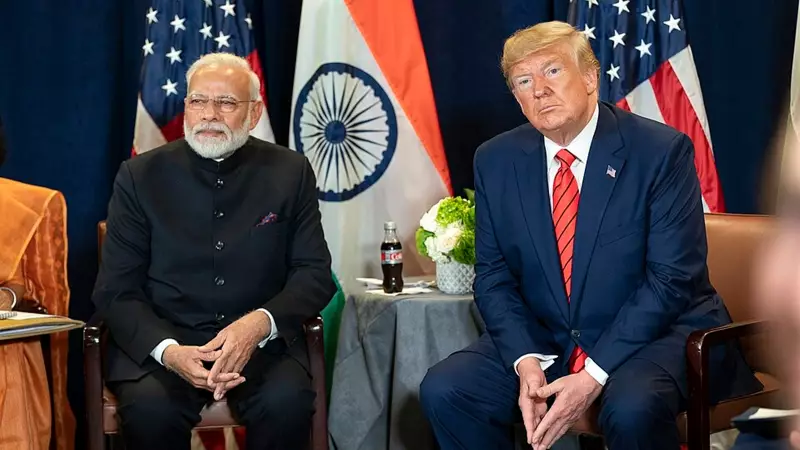
In a significant diplomatic development, US President Donald Trump has extended a formal invitation to Prime Minister Narendra Modi for India to join the newly proposed Board of Peace for Gaza. This invitation, delivered on January 16, 2026, represents a crucial moment in India's foreign policy trajectory and its evolving role in West Asian geopolitics.
The Trump-Modi Connection and Gaza Roadmap
The invitation follows Prime Minister Modi's earlier endorsement of President Trump's comprehensive 20-point roadmap for Gaza, which the Indian leader welcomed as a viable pathway toward lasting peace, security, and development for Palestinians, Israelis, and the broader West Asian region. This alignment of perspectives has paved the way for this strategic invitation, positioning India among approximately 50-60 world leaders reportedly asked to participate in this international initiative.
India's consistent position has emphasized peace based on a two-state solution, unconditional release of prisoners, and enhanced humanitarian assistance to affected populations. The Board of Peace, while endorsed in principle by the UN Security Council in November 2025, represents a distinct approach to conflict resolution that has generated varied international responses.

Global Participation Patterns and Strategic Implications
The composition of participating nations reveals fascinating geopolitical alignments. While France has declined participation and Russia and China continue to examine the proposal, several key players have embraced the initiative:
- Most West Asian nations, including GCC members Saudi Arabia, UAE, Qatar, and Bahrain
- Central Asian republics demonstrating regional support
- Pakistan, Turkey, and Azerbaijan joining the framework
- Belarus among early acceptors, suggesting Russian tacit approval
Notably, Israeli Prime Minister Benjamin Netanyahu has agreed to join after initial objections regarding governance structures and the inclusion of nations Israel views as hostile or supportive of Hamas. This development suggests potential for unprecedented multilateral engagement on Gaza's future.
Board Structure and Financial Considerations
The proposed Board of Peace features a multi-tiered architecture with several distinctive elements:
- An inner "founding executive council" chaired by President Trump himself
- A main board to which PM Modi has been invited, distinct from both the inner circle and Gaza executive board
- A provision for "permanent membership" requiring a US$1 billion contribution beyond the initial three-year term
President Trump's role as inaugural chairman, potentially extending beyond his presidential term, adds another layer of complexity to the initiative's long-term viability. Reports suggest Russian President Vladimir Putin is considering contributing $1 billion from frozen assets for a permanent seat, indicating how financial considerations may shape major powers' participation.
India's Strategic Calculus and Historical Context
For India, the invitation represents recognition of its traditional influence in West Asia and its credible voice on the global stage. Participation could yield significant benefits:
- Greater influence in determining Gaza's political and economic future
- Potential contracts for Indian companies in reconstruction efforts
- Enhanced demonstration of India's commitment to Palestinian welfare and regional stability
- Strengthened diplomatic positioning with the United States
However, Indian policymakers must weigh these advantages against several concerns. The board represents a US-led enterprise, contrasting with the UN-led processes traditionally preferred by India, Russia, and China. When the UN Security Council approved the board concept, both China and Russia abstained, reflecting reservations about initiatives outside UN frameworks.

Broader Implications and Diplomatic Balancing
The invitation arrives amid complex bilateral dynamics, including US imposition of 50% tariffs over India's energy trade with Russia and threats of further penalties related to Iran. While significant, acceptance does not guarantee either a bilateral trade deal or protection from future geopolitical shocks involving core Indian interests.
India's historical approach to international conflict resolution has typically operated within UN-backed frameworks, as seen in its chairing of the Neutral Nations Repatriation Commission for Korea and the International Commission for Supervision and Control for Vietnam. Current multilateral forums like G20, BRICS, and SCO focus primarily on strategic and economic issues rather than resolving major disputes like the Israeli-Palestinian conflict.
Additional concerns include reports that Chairman Trump would wield veto powers, lack of clarity regarding the fate of billion-dollar contributions, uncertainty about successor US administrations' support, and the board's potentially complex internal dynamics given its disparate membership.
The Path Forward for Indian Diplomacy
As India evaluates this invitation, several factors will influence the final decision:
- The precedent such a board sets for managing other international disputes
- India's commitment to multilateralism and UN-centered approaches
- Balancing relationships with all major powers involved
- Protecting core national interests amid evolving global dynamics
The provisions allowing representation at the level of a high-ranking official and including an exit clause represent positive attributes that may facilitate India's participation. Ultimately, India's response will reflect careful evaluation of how this opportunity aligns with its broader foreign policy objectives, historical principles, and vision for its role in global governance.
This decision comes at a pivotal moment in India's diplomatic evolution, testing its ability to navigate complex international relationships while advancing both its strategic interests and its commitment to global peace and stability.





