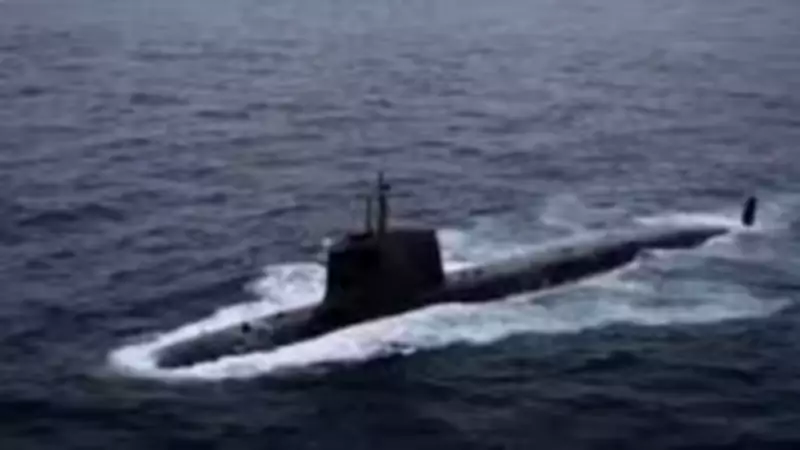
India's Sea-Based Nuclear Deterrent Set for Major Enhancement with INS Aridhaman
India's strategic naval capabilities are poised for a significant leap forward as the country prepares to commission its third indigenously built Arihant-class nuclear-powered ballistic missile submarine (SSBN), INS Aridhaman (S4). Defence sources indicate that the commissioning is likely to occur by April-May, marking a critical milestone in India's defense modernization efforts.
Advanced Design and Enhanced Capabilities
Constructed under the Advanced Technology Vessel (ATV) project at the Ship Building Centre in Visakhapatnam, INS Aridhaman represents a substantial upgrade over its predecessors. Weighing 7,000 tonnes, it is notably larger than the earlier INS Arihant and INS Arighaat, which each weighed approximately 6,000 tonnes.
The submarine's most significant improvement lies in its missile carrying capacity. It features eight vertical launch system (VLS) tubes, doubling the four tubes available on previous vessels. This enhancement allows INS Aridhaman to deploy up to 24 K-15 Sagarika short-range missiles with a range of 750 kilometers and eight K-4 intermediate-range missiles capable of reaching targets 3,500 kilometers away. Additionally, the submarine is designed to accommodate future K-5 missiles with an impressive range of 6,000 kilometers.

Stealth and Propulsion Systems
INS Aridhaman is powered by an 83 MW Compact Light Water Reactor (CLWR), an upgraded pressurised water reactor specifically engineered for minimal acoustic signature. This advanced propulsion system, combined with a seven-blade propeller, enables the submarine to achieve speeds of 12-15 knots on the surface and an impressive 24 knots when submerged.
The submarine incorporates sophisticated indigenous sonar systems, including USHUS and Panchendriya, along with anechoic tiles that significantly improve both stealth and detection capabilities. These features work in concert to make INS Aridhaman one of the most advanced underwater platforms in India's naval arsenal.
Strategic Implications and Future Developments
Once operational, INS Aridhaman will bring India's SSBN fleet under the Strategic Forces Command to three vessels. This represents a crucial step toward achieving Continuous At-Sea Deterrence, a strategic doctrine that ensures at least one nuclear submarine remains on patrol at all times to maintain credible second-strike capability.
The enhanced missile payload and superior stealth characteristics of INS Aridhaman will substantially strengthen India's nuclear deterrence posture. The submarine is expected to be stationed at Project Varsha, a high-security naval base featuring underground pens near Visakhapatnam.
Meanwhile, India continues to expand its underwater warfare capabilities through multiple channels. The country is set to acquire the Russian Akula-class nuclear-powered attack submarine, Chakra III, expected to arrive by 2027-2028. Additionally, negotiations are underway with Germany for six advanced diesel-electric submarines under Project-75(I), further diversifying India's submarine fleet capabilities.
These developments collectively represent a comprehensive approach to maritime security, combining indigenous development with strategic international partnerships to create a robust and versatile underwater defense system.