India's Late Entry to US-Led Pax Silica Echoes Minerals Partnership Delay
Indian policymakers are experiencing a strong sense of deja vu. The country's recent induction into the US-led Pax Silica initiative has come through belatedly, just like its earlier entry into the Minerals Security Partnership.
A Pattern of Delayed Inclusion
The United States launched Pax Silica in December under the Trump administration. India joined this strategic grouping a full month after its establishment. This pattern closely mirrors what happened with the Minerals Security Partnership.
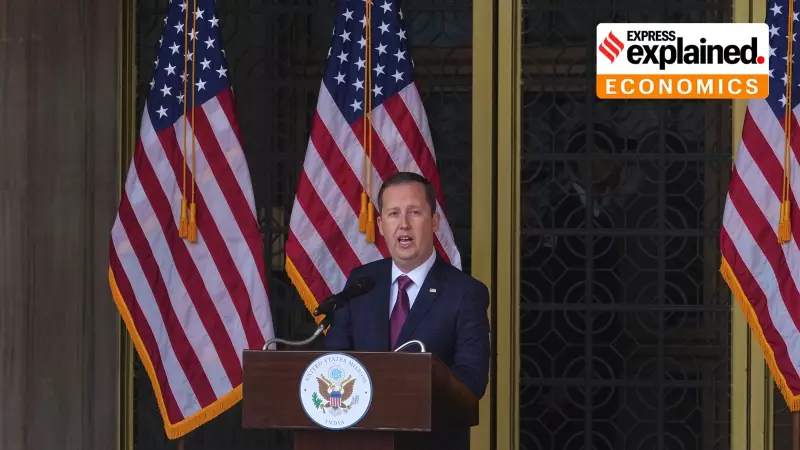
The Biden administration launched MSP in June 2022. India gained entry to that initiative a complete year later. Many observers see India's inclusion in Pax Silica as coinciding with incoming US Ambassador Sergio Gor's arrival. They interpret this timing as a conciliatory gesture to repair strained bilateral ties.

Strategic Significance for India
This new grouping holds considerable importance for India. Pax Silica signals how the next global technology order might take shape. Countries are regrouping in strategic sectors where China maintains a strong presence.
Such groupings could work cohesively to address supply chain chokepoints. In theory, nations controlling manufacturing inputs like magnets and critical minerals could potentially shape rules for everyone else. As one former diplomat noted, "India should read Pax Silica as a map of where leverage will sit."
Not making the initial list carries a subtle message. India's exclusion from the founding members suggests the country needs to demonstrate more tangible contributions.
India's Positioning Challenges
Pax Silica aims to build secure supply chains spanning critical minerals, energy inputs, advanced manufacturing, and semiconductors. These areas represent significant concerns for New Delhi as well.
India missed the initial list because it currently lacks critical edge technologies. The country also doesn't possess major repositories of critical minerals that Pax Silica targets. This contrasts sharply with the eight founding members.
Each founding country brings specific strengths:
- Japan and South Korea contribute technology and manufacturing expertise
- The Netherlands controls specialized chipmaking lithography machines
- Australia serves as a repository of critical minerals
- Singapore functions as a global transhipment hub
- Israel, the UK, and the UAE represent innovation centers with visible AI progress
India has been trying to position itself within global supply chain realignments. American and European companies are diversifying away from China. Yet the country's delayed entries into both MSP and Pax Silica highlight persistent gaps.
Understanding Pax Silica's Objectives
Pax Silica represents a US-led strategic initiative to counter China's dominance in new-age sectors. The grouping aims to reduce what the US terms "coercive dependencies." It seeks to protect materials and capabilities foundational to artificial intelligence.
The initiative ensures aligned nations can develop and deploy transformative technologies at scale. According to US State Department documents, Pax Silica will build a "secure, prosperous, and innovation-driven silicon supply chain." This covers everything from minerals and chips to security and logistics across the AI stack.
The common theme among founding members is clear. These countries already hold leads in AI or semiconductor supply chains. India currently lacks comparable tangible assets, much like with earlier initiatives including MSP.
Lobbying Efforts and Strategic Concerns
Government officials confirm that considerable lobbying by New Delhi secured India's entry into both MSP and Pax Silica. The lack of processing capacity and expertise primarily explains why India didn't make the initial cut.
Experts identify China's dominance in global critical minerals markets as a shared challenge. This creates wide price gaps between Chinese products and alternatives. While this situation could help India attract American investments, it also exposes the country to potential Chinese coercion.

Pax Silica measures include pursuing joint ventures and strategic co-investments. The initiative will protect sensitive technologies and critical infrastructure from undue access. It aims to build trusted technology ecosystems covering ICT systems, fiber-optic cables, data centers, foundational models, and applications.
Most of these objectives resonate with India's strategic intent. US Secretary of the Treasury Scott Bessent framed China's export controls on critical minerals as "China versus the rest of the world" last October. He stated that the US expects strong support from Europe, India, and other Asian democracies.
Despite this expectation, India still found itself outside Pax Silica's initial membership. The country's belated inclusions in both strategic initiatives underscore ongoing challenges. India must demonstrate clearer value propositions to become a natural partner of choice in US-led strategic endeavors.