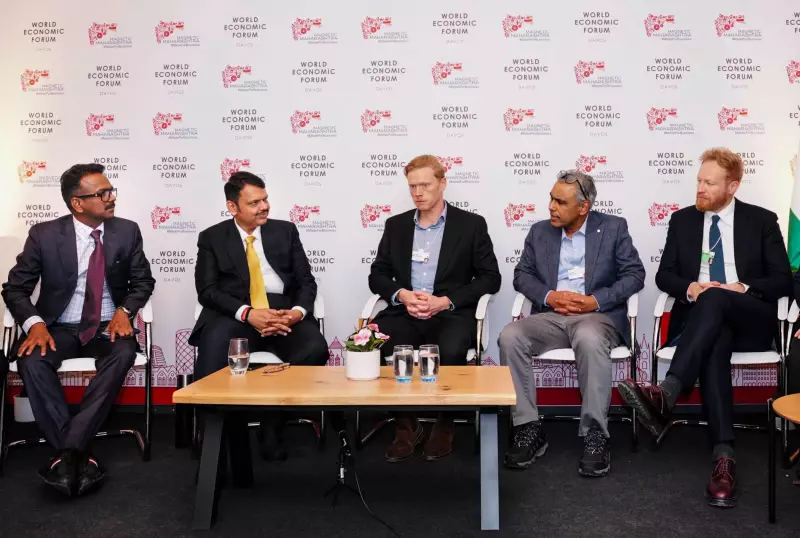
Davos Signals End of an Era: India's Strategic Imperative in a New World Order
For more than fifteen years, academic circles have debated the demise of the US-led international rules-based system. However, such a profound shift only gains true legitimacy when acknowledged by political leaders on the global stage. Canadian Prime Minister Mark Carney's recent address at the World Economic Forum in Davos served as a symbolic marker of this transition, reminiscent of how the Suez Crisis decades ago signaled the decline of British imperial dominance. Perhaps even more significant than this acknowledgment was Carney's emphasis on the evolving role of middle powers in the emerging global architecture.
India's Unique Position and Formidable Challenges
Whether India formally qualifies as a middle power is a matter of debate, but New Delhi undeniably shares many of the constraints faced by such nations. The international economic landscape has become increasingly complex and challenging. The United States has been actively weaponizing its economy and the dollar-based financial system, while China continues to export its industrial overcapacity, effectively undermining any semblance of a level playing field for other nations.
Specifically for India, three distinct challenges have emerged that require urgent attention and strategic navigation:

- Evolving US Relations: India has invested substantial political capital over two decades in cultivating its relationship with the United States. While this relationship shows signs of strain, access to American markets remains critically important for India's economic growth.
- China's Strategic Opposition: Despite some recent thawing in bilateral relations, Beijing remains fundamentally opposed to the prospect of India emerging as an industrial powerhouse, creating persistent tensions in economic engagement.
- Industrialization Hurdles: Despite numerous reform initiatives, India continues to struggle with facilitating broad-based industrialization, which is essential both for lifting incomes and strengthening national security in an increasingly uncertain world.
The Imperative for a Comprehensive Commercial Foreign Policy
To overcome these significant constraints, India needs to develop and implement a comprehensive commercial foreign policy. Traditionally, a nation's foreign policy primarily focuses on securing its external security environment, which in turn allows commerce to flourish. However, at this critical juncture, merely ensuring security is no longer sufficient. States must now actively shape their economic environments as well.
While countries typically deploy domestic political economy tools to address external economic constraints during ordinary times, the current moment demands something far more comprehensive and integrated. A commercial foreign policy can therefore be understood as the deliberate coordination of a state's diplomatic capacity with domestic fiscal and regulatory tools to actively craft a country's external economic environment.
In the Indian context, this translates to strategically using the country's fiscal and regulatory instruments in conjunction with commercial diplomacy to overcome both domestic and global challenges to industrialization.
Reforms, Trade Deals, and Persistent Manufacturing Challenges
After years of experimenting with protectionist approaches, the Indian government has significantly reconfigured its trade policy. Over the past couple of years, New Delhi has successfully negotiated numerous trade agreements, including significant deals with the United Kingdom, Australia, the United Arab Emirates, and now a major agreement with the European Union.
However, as noted by trade economists like C Veeramani, merely signing trade deals is insufficient to facilitate industrialization and export growth. More structural reforms are necessary. The Indian government has indeed undertaken substantial reforms, particularly concerning labor laws, correcting tariff inversion issues, corporate taxation, and the domestic goods and services tax system.

Despite these efforts, coupled with India's industrial policy initiatives like the Production Linked Incentives scheme, which should ideally have facilitated major manufacturing breakthroughs, industrialization and the necessary domestic and foreign direct investments have remained elusive, as highlighted by analysts like Ruchir Sharma. Adding to this puzzle is the fact that US interest rates have been steadily declining, which should theoretically further incentivize manufacturing FDI into India.
Yet, barring some success in electronics, particularly smartphones, there have been no major manufacturing breakthroughs. What appears to be holding back India's manufacturing takeoff is a cumbersome regulatory environment coupled with an inability to implement contracts efficiently due to a dysfunctional judicial system.
Three Pillars of India's Commercial Foreign Policy
How can a commercial foreign policy address some of these persistent issues? There must be three clear elements to India's approach:
First, building domestic regulatory enclaves that feature less burdensome licensing and compliance requirements, along with simpler mechanisms for dispute resolution. An ideal strategy would involve revamping major special economic zones (SEZs) in India's leading industrial states across the southern and western regions, transforming them into attractive sites for investment and industrial cluster formation. The federal government should deploy some of its fiscal capacity to develop more SEZ-centric infrastructure essential for the smooth functioning of businesses.
Second, redirecting infrastructure investment toward resolving manufacturing hurdles. Over the past decade, the Indian economy has been substantially propped up by a surge in public capital expenditure, which has significantly improved the country's infrastructure. However, as Mihir Sharma argues, while building "highways to forgotten towns" is commendable in principle, it is unlikely to sufficiently facilitate private and foreign investments. It is now time to tweak this infrastructure-heavy economic strategy and redirect a portion of federal fiscal capacity toward resolving specific hurdles faced by Indian manufacturing.
Consider this practical example: Currently, one of the major challenges Indian manufacturing firms face involves China's export curbs on capital and intermediate goods. At present, China not only supplies the largest share of these machinery and intermediate inputs but does so at the most competitive prices. Providing these goods to India would essentially mean Beijing assisting the emergence of its key Asian adversary. The government in Delhi has two potential options: first, provide Chinese suppliers with financial incentives to export those goods to India; if this proves unsuccessful, the government should subsidize the cost differential for importing those capital goods from other manufacturing countries like Germany.
Third, developing necessary human resources for execution. It is unrealistic to expect the existing bureaucracy to transform itself into a developmental state overnight. However, relatively minor reforms could yield significant progress. The Ministry of External Affairs should hire industry consultants and place one in every single MEA regional division. This group of industry consultants should then hold regular meetings with different industry representatives from across India. Furthermore, India's foreign embassies and high commissions should be constantly apprised about these inputs from industry associations.
These consultants could effectively bridge the information gap regarding constraints Indian firms face concerning foreign investments. This relatively simple reform could add a substantial commercial arm to India's existing diplomatic framework. Over time, the agenda should expand to bolstering the commercial capabilities of India's embassies and high commissions worldwide.
Conclusion: Bridging the Gulf Between Policy Domains
As the traditional walls between security and commerce continue to collapse, the gulf between domestic economic policy and foreign policy must correspondingly diminish. India stands at a critical crossroads in a rapidly changing global order. By implementing a strategic commercial foreign policy that combines diplomatic engagement with targeted domestic reforms, India can better navigate the challenges posed by shifting economic powers and create an environment conducive to sustainable industrialization and economic growth.
The emerging global reality demands innovative approaches, and India's response will significantly determine its position in the new international economic architecture taking shape before our eyes.