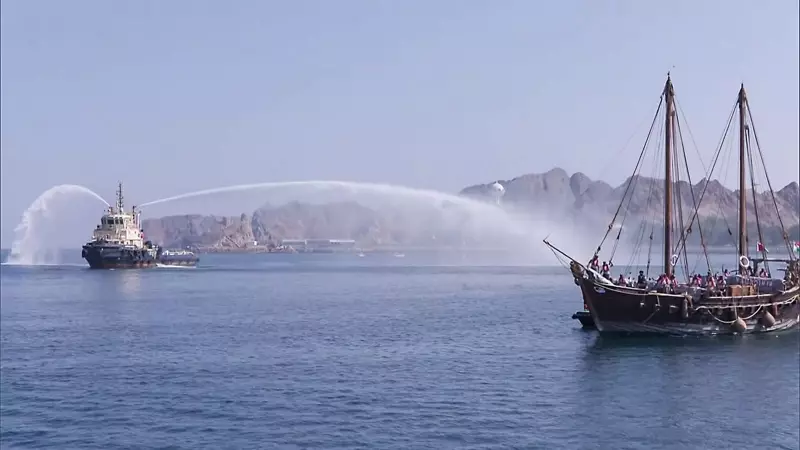
The Indian Navy Sailing Vessel Kaundinya made history on Wednesday. It sailed into Muscat's Port Sultan Qaboos. This marked the completion of its maiden voyage. The journey retraced ancient maritime routes between India and Oman.
A Journey Back in Time
The vessel set sail from Porbandar in Gujarat on December 29. It arrived in Muscat after a challenging 17-day voyage. The crew faced heavy rolling seas and periods of calm winds. They also experienced moments of wonder like witnessing bioluminescence at night.
Rebuilding Ancient Technology
INSV Kaundinya is a 'stitched ship'. It replicates a fifth-century vessel depicted in Ajanta cave paintings. Artisans from Kerala built it using traditional techniques. They used coconut fibre stitching, wooden joinery, and natural resins. The ship has no modern nails or metal fastenings.

The vessel features square cotton sails. It lacks an engine or modern propulsion. Movement depends entirely on wind and trailing oars. This design mirrors how ancient Indian mariners sailed the oceans.
Debunking Colonial Myths
Historian Sanjeev Sanyal was part of the crew. He helped pitch the original idea for the ship. Sanyal addressed a persistent colonial narrative during the voyage.
"There was a colonial narrative that Indians feared the seas," Sanyal stated. "We proved it's not true."
He emphasized the voyage validated ancient shipbuilding knowledge. The team discovered the stitched ship could achieve speeds of four knots in good conditions. This exceeded their initial expectations of two to three knots.
Challenges of the Voyage
Commander Y Hemanth Kumar served as the expedition's officer-in-charge. He described the journey as "watching a child growing up". Kumar has been involved with the project since its conceptualization in 2021.
"The ship rolls a lot," Kumar explained. "Unlike a modern ship, it does not have a deep keel."
The crew dealt with high sea states at the start. Manual operations like raising sails proved difficult during extensive rolling. Periods of no wind tested their patience as the vessel drifted on glassy seas.
Unexpected Encounters
An interesting incident occurred near Sir Creek. Indian fishing vessels spotted the unusual ship sailing at night with its sails up. The close-knit fishing community reported the "strange apparition" to the Coast Guard via emergency channel 16.
Sanyal recalled the moment with amusement. The fishing vessels essentially tried to have their own ship apprehended.
Life On Board
Commander Vikas Sheoran skippered the ship. He described the experience as "surreal". Maintaining morale during the long voyage presented the biggest challenge. Fresh rations ran out after a few days. The crew ate thepla with mango pickle for breakfast when supplies dwindled.
During calm periods, the crew read maritime history books. They studied Sanyal's own work, 'The Ocean of Churn'. Sheoran noted it helped having a historian on board.
Sanyal shared his personal highlights. He mentioned the creaking sound of wood, fluttering sails, and sleeping on deck under a full moon. The physical effort of handling the ship in rolling seas created a memorable experience.
Historical and Diplomatic Significance
The Embassy of India in Muscat issued a press statement. It called the voyage a powerful symbol of maritime ties spanning over 5,000 years between India and Oman. The expedition highlights oceans as connective corridors rather than barriers.
The journey holds special significance. It coincides with the 70th anniversary of diplomatic relations between India and Oman.
Inspiring Future Generations
Commander Kumar expressed hope for the voyage's legacy. "India has been a shipbuilding nation for centuries," he said. "It's not just an industry, but a legacy of our country."
He wants the journey to inspire the next generation of shipbuilders and seafarers. The message to youth celebrates India's maritime legacy and encourages a spirit of adventure.
The vessel will undergo necessary underwater checks in Muscat. It plans to sail back to Karwar in India within a few weeks. This historic voyage proves ancient Indian maritime technology remains viable today.