

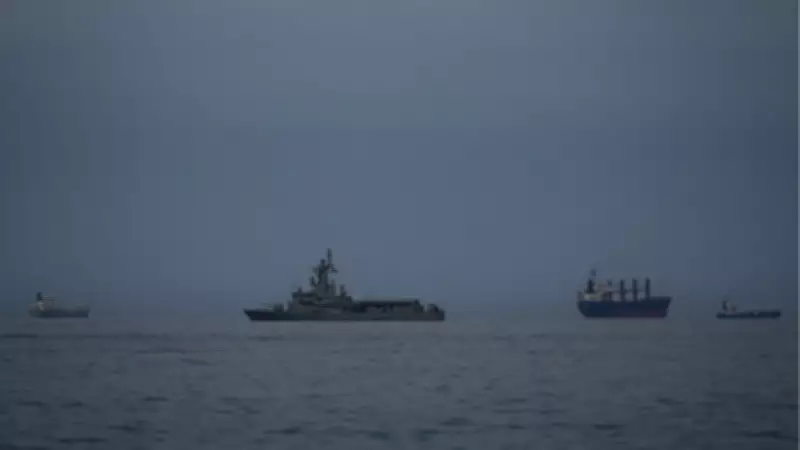
Iran Grants Safe Passage to Indian Ships in Strait of Hormuz Amid Rising Tensions
In a significant development, Iran announced on Thursday that it will permit Indian-flagged vessels to navigate safely through the Strait of Hormuz. This decision comes as maritime traffic through this critical waterway has seen a sharp decline following recent US-Israel strikes on Iran, according to a report from The Economic Times.
Escalating Conflict and Maritime Restrictions
The move unfolds against a backdrop of heightened concerns over the security of global energy supply routes that traverse the narrow strait, which connects the Persian Gulf with the Gulf of Oman. Concurrently, vessels associated with the United States, Europe, and Israel continue to face stringent restrictions, highlighting the geopolitical complexities at play.
Ensuring the safe passage of tankers through the Strait of Hormuz was a key topic during a recent conversation between India's External Affairs Minister S. Jaishankar and his Iranian counterpart Abbas Araghchi. Their discussion, which took place late Tuesday, focused on the evolving situation in West Asia and marked their third interaction since the outbreak of the Iran war.

Iran's Warning and Enforcement Measures
Despite granting safe passage to Indian ships, Iran has issued a stern warning that all vessels intending to transit the Strait of Hormuz must obtain prior approval from Tehran. Failure to comply could result in targeting, as emphasized by Iranian officials.
Rear Admiral Alireza Tangsiri, commander of the naval arm of Iran's Islamic Revolutionary Guards Corps (IRGC), highlighted this enforcement by stating that two ships, the Express Rome and Mayuree Naree, were struck on Wednesday after ignoring Iran's warnings. In a post on X, he remarked, "Were the ships assured of safe passage through the Strait of Hormuz? This should be asked of the crews... who today, trusting in empty promises, ignored the warnings and intended to cross the Strait but were caught." He further added, "Any vessel intending to pass must obtain permission from Iran."
According to Iranian state media, Tehran has intensified control over maritime traffic through the Strait of Hormuz in response to the escalation of hostilities with the United States and Israel. Iranian officials have indicated that vessels not aligned with the interests of Washington or Tel Aviv would be allowed safe transit.
Global Significance of the Strait of Hormuz
The Strait of Hormuz remains one of the world's most vital maritime chokepoints, with immense implications for global energy markets:
- More than 20 million barrels of crude oil pass through daily, accounting for approximately one-fifth of global oil consumption.
- Nearly a quarter of seaborne oil trade relies on this passage.
- A significant portion of global liquefied natural gas shipments also traverses this corridor.
Any disruption to shipping through the strait can quickly ripple across global energy markets, affecting fuel prices, shipping routes, and supply chains worldwide, underscoring the strategic importance of Iran's recent actions.
India's Monitoring and Response Efforts
In response to the situation, India's shipping ministry reported that 28 Indian-flagged vessels are currently operating in the Persian Gulf region. Of these:
- 24 ships are located west of the Strait of Hormuz, carrying 677 Indian seafarers.
- 4 vessels are east of the strait, with 101 Indian crew members onboard.
Authorities are closely monitoring the situation, with constant tracking of Indian ships and crew in the region. A 24-hour control room has been operational at the ministry and the Directorate General of Shipping since February 28 to monitor developments and coordinate assistance. Officials noted that shipping companies, recruitment agencies, and Indian missions in the region are in regular contact to ensure the safety of Indian seafarers.

Global Energy Market Reactions
Amid the volatility triggered by the conflict and fears of supply disruptions through the Strait of Hormuz, the US Department of Energy announced plans to release 172 million barrels from the Strategic Petroleum Reserve starting next week. This move aims to stabilize oil markets as they react to the ongoing tensions and potential impacts on global energy supplies.





