

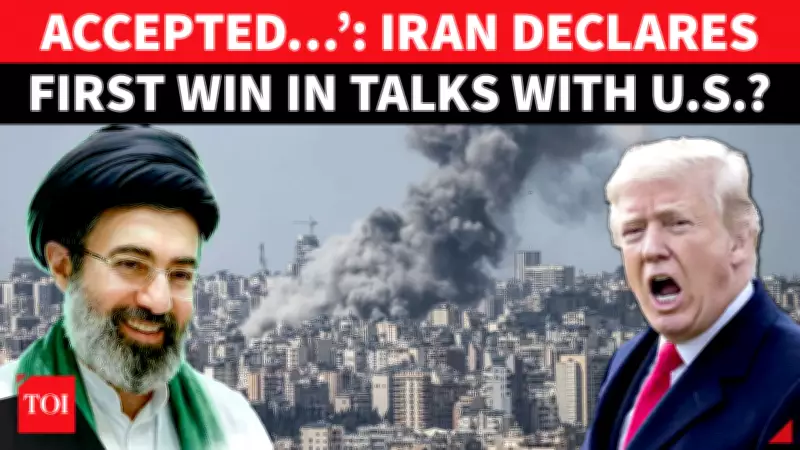
Iran Signals Diplomatic Progress in US Negotiations
In a development that could reshape the trajectory of the Iran conflict, Tehran has signaled what appears to be its first diplomatic win in ongoing talks with the United States. The Iranian embassy in South Africa posted a brief but highly significant message stating that "the preconditions have been accepted." While the statement lacked specific details, diplomatic observers have interpreted this as a potential breakthrough indicating that key Iranian demands may have been acknowledged in some form.
Gap Between Diplomatic Messaging and Operational Reality
The Iranian announcement comes amid two parallel developments that highlight the complex nature of the current situation. On one hand, there appears to be movement toward possible diplomatic resolution, while on the other, growing uncertainty persists about whether stability can be achieved in the near term.
One of Tehran's primary demands has been the halting of Israeli strikes in Lebanon. While Israeli operations in Lebanon have continued, they have reportedly been conducted at a reduced pace. However, there has been no official confirmation of a complete cessation of hostilities, creating what analysts describe as a critical gap between diplomatic messaging and operational reality on the ground.

Trump's Assessment of Prolonged Instability
Adding another layer of complexity to the situation, former US President Donald Trump is now reported to believe that reopening the strategically vital Strait of Hormuz is unlikely in the near term. This assessment signals that Washington may be preparing for prolonged regional instability rather than anticipating a quick resolution to the ongoing tensions.
The Strait of Hormuz serves as a crucial maritime chokepoint through which approximately one-fifth of the world's oil passes. Any prolonged closure or instability in this region would have significant implications for global energy markets and international trade routes.
Context of Regional Tensions
The diplomatic developments occur against a backdrop of heightened regional tensions that have seen multiple flashpoints emerge in recent months. The situation in Lebanon, where Hezbollah has engaged in rocket exchanges with Israel, remains particularly volatile. Meanwhile, Iranian-backed fighters have conducted operations against Israeli positions, further complicating the security landscape.
International observers continue to monitor the situation closely, with many noting that while diplomatic channels appear to be active, the gap between political statements and military realities on the ground remains substantial. The coming weeks are expected to provide clearer indications of whether the current diplomatic momentum can translate into tangible de-escalation or if regional instability will persist.






