

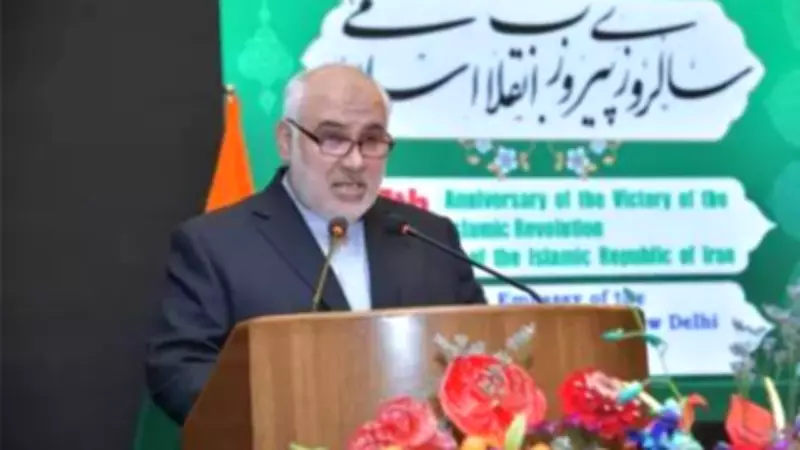
Iran Ambassador Addresses War Narratives and Maritime Security in Exclusive Interview
In a candid conversation with The Times of India, Iran's Ambassador to India, Dr. Mohammad Fathali, provided insights into the ongoing conflict, emphasizing Iran's stance on the war and its implications for regional stability. He described the situation as an "illegal war" imposed on Iran, highlighting the broader impact on the international community.
Solidarity with India and Clarification on Social Media Actions
Dr. Fathali expressed profound gratitude for the overwhelming support from India, noting contributions from all regions and communities across the country. He clarified that the deletion of certain tweets thanking India was not due to any specific issue but rather a desire to show appreciation collectively to all Indians, regardless of religion or ethnicity. "We are truly grateful for the kindness of the Indian people," he stated, acknowledging the Indian government and citizens for their valuable solidarity during challenging times.
War Narratives and Global Perceptions
Addressing the battle of narratives surrounding the conflict, the ambassador criticized the basis of the war, calling it an act of aggression rooted in illusions. He pointed out that claims of an immediate threat from Iran were quickly denied by the Pentagon, and allegations about Iran's nuclear program were unfounded. "Everyone knows this is a war based on illusions," he asserted, emphasizing that Iran is defending itself with popular support and that the enemies' goals, such as regime change, have not been achieved.

India's Balanced Stance and Expectations
Dr. Fathali praised India for its "balanced" and "neutral" approach, reflecting a deep understanding of regional complexities. He expressed appreciation for India's measures while calling on all independent nations to condemn violations of international law, including attacks on civilian infrastructure and the killing of innocent civilians. This underscores Iran's expectation for global solidarity against aggression.
Maritime Security in the Strait of Hormuz
On the critical issue of maritime transit, the ambassador clarified Iran's position regarding the Strait of Hormuz. He emphasized that the strait is within the territorial waters of Iran and Oman, not international waters, and decisions on transit are jointly managed by Tehran and Muscat. During wartime, the strait is closed only to countries at war with Iran, while friendly nations like India receive special measures for safe passage. He attributed the reduced shipping activity to regional insecurity and high insurance costs, not Iranian restrictions.
Operational Approach and International Messaging
Dr. Fathali explained that assistance to Indian vessels is handled on a case-by-case basis, ensuring coordination based on real-time conditions and adherence to international maritime laws. He reiterated that the Strait of Hormuz remains open to all except aggressor nations. In a message to the international shipping community, he blamed the United States and Israel for regional instability, asserting that Iran's actions are lawful measures to repel aggression and protect sovereignty.
Reflections on Diplomatic Tenure in India
Reflecting on his time as ambassador, Dr. Fathali highlighted the strengthening of bilateral relations, rooted in deep historical and cultural ties. He noted the sympathy and solidarity from the Indian people during difficult times, stating, "True friends are known in hard times, and our Indian friends have shown their true friendship." He acknowledged positive developments in various fields and close governmental contacts, underscoring the enduring partnership between the two nations.






