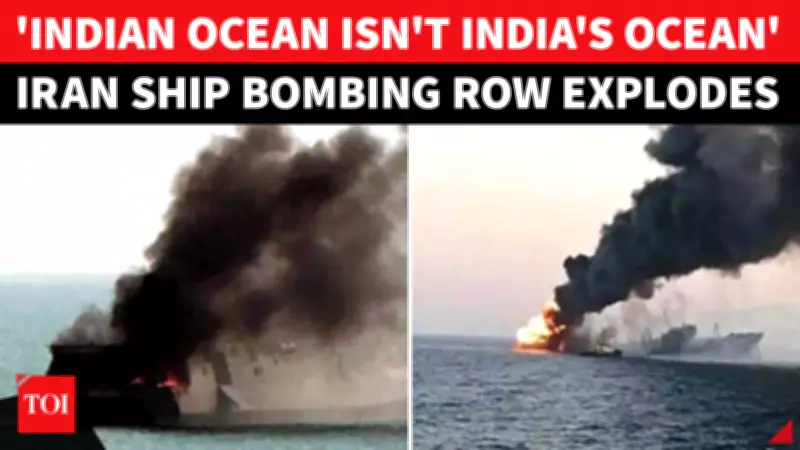
Iranian Frigate IRIS Dena Sinking: India's Role in US Strike Debated
The recent sinking of the Iranian warship IRIS Dena has ignited a fierce and ongoing debate within India regarding its strategic positioning and foreign policy stance in the escalating conflict between the United States, Israel, and Iran. The incident, which resulted in significant loss of life, has placed New Delhi under intense moral and strategic scrutiny.
The Attack and Its Immediate Aftermath
On March 4, 2026, a United States submarine launched a torpedo attack that struck and sank the Iranian Navy frigate IRIS Dena. The vessel was operating in international waters approximately 100 nautical miles south of India, off the coast of Sri Lanka. Initial reports confirm that at least 80 crew members lost their lives in this devastating naval engagement.
The location of the attack has become a central point of contention. While the sinking occurred in technically international waters, critics and analysts are questioning India's indirect involvement. Some argue that India's broader geopolitical invitations and alignments in the region inadvertently placed the Iranian ship within operational range of American forces, thereby exposing New Delhi to difficult questions about its neutrality and strategic calculations.

Strategic and Moral Scrutiny on India
The incident has triggered a complex examination of India's foreign policy doctrine. Key questions being raised include:
- How should India balance its historical ties with Iran against its growing strategic partnership with the United States?
- What are India's responsibilities and capabilities regarding maritime security in the Indian Ocean Region?
- Does the proximity of the attack to Indian territory imply a tacit approval or a failure of diplomatic signaling?
Experts note that the sinking of the IRIS Dena is not merely a military event but a significant geopolitical flashpoint. It tests India's ability to navigate the treacherous waters of Middle Eastern conflicts while safeguarding its own national interests and maintaining stability in its maritime backyard.
Cutting Through the Information Fog
In the wake of the attack, social media and public discourse have been flooded with a mixture of facts, half-truths, speculation, and outright misinformation. The narrative has become muddled, making it challenging for the public to discern the full scope of the event and its implications.
Analysts like Anand Ranganathan have emphasized the need for careful scrutiny beyond the noise. Understanding the precise chain of events, the communications (or lack thereof) from the Iranian vessel, and the exact geopolitical maneuvers leading to the strike is crucial for forming an accurate assessment of India's position and responsibilities.
The debate extends beyond immediate blame and delves into long-term strategic consequences. It touches upon core issues of naval warfare protocols, crisis communication in conflict zones, and the evolving nature of alliance politics in a multipolar world where the Indian Ocean is increasingly a theater of great power competition.
This incident serves as a stark reminder of the volatile security environment and the complex diplomatic tightrope that nations like India must walk. The discussions it has sparked are likely to influence India's foreign policy formulation and its approach to regional security partnerships for the foreseeable future.