Iran's Supreme Leader's Death Reverberates in His Mentor's Ancestral Indian Village
In the tranquil village of Kintoor, located in the Barabanki district of Uttar Pradesh, a profound sense of sorrow has descended following the news of Iran's Supreme Leader Ayatollah Ali Khamenei's assassination. Situated approximately 4,000 kilometers from Tehran, this remote Indian community is grappling with shock and grief, its atmosphere heavy with concern and anger as the gravity of the West Asia conflict sinks in.
A Village Transformed by Grief
Upon entering Kintoor, one immediately notices the stark contrast to its usual lively spirit. A heavy silence now pervades the air, thick with sorrow, reflecting the village's deep historical connection to Ayatollah Ruhollah Musavi Khomeini. Khomeini, the architect of Iran's 1979 Islamic Revolution and founder of the Islamic Republic, serves as a pivotal link between this Indian locale and the current events in Iran.
While Khamenei himself had no direct ancestral or familial ties to India, his connection stems from his predecessor and mentor, Khomeini. The lineage traces back to Khomeini's great-grandfather, Sayed Ahmad Musavi 'Hindi', who was born in Kintoor before migrating to Iran in 1834. This migration occurred during a pilgrimage, or 'ziyarat', alongside the then Nawab of Awadh, a detail that underscores the historical interplay between the regions.

Protests and Mourning in Response
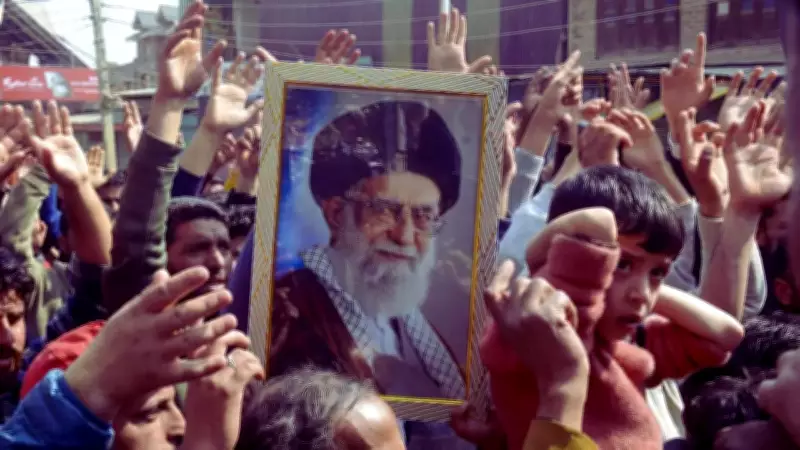
As news of Khamenei's killing spread, an angry group of over 200 residents, comprising both Shias and Sunnis, took to the streets in peaceful protest. They voiced strong opposition to the attack by US and Israeli forces, with the demonstration stretching into the night. Mourners, dressed predominantly in black, carried photos of Khomeini and Khamenei, while shops in adjoining areas closed in solidarity.
A three-day mourning period was declared, accompanied by organized majlis gatherings. Protesters emphasized Khamenei's bravery, stating, "Khamenei opted for bravery instead of surrender, and his martyrdom is worthy of respect and remembrance." Even days after the assassination, the air in Kintoor remains charged with lingering anger and grief, highlighting the community's emotional investment in the distant conflict.
Historical Ties and Ancestral Heritage
Amid the escalating war in West Asia, conversations in Kintoor homes have turned to stories passed down through generations. In one household, a striking portrait of Khomeini commands attention, serving as a constant reminder of the village's legacy. According to 33-year-old Adil Kazmi, whose ancestor was a cousin to Sayed Ahmad Musavi, Musavi's writings had sparked revolutionary ideas in India, leading the British to prevent his return after his pilgrimage.
Historian Ravi Bhatt explains that Khomeini's ancestors originally came from Nishapur in northeast Iran to India, later encouraging relatives to settle in Barabanki, which had emerged as a significant Islamic center. The title "Hindi" was retained in Iranian records, a nod to their Indian roots that preserved the family's ancestral heritage. Musavi went on to become a Twelver Shia cleric, fathering Syed Mostafa, who would become Khomeini's father, before passing away in 1869 and being buried in Karbala.
Kintoor's Broader Historical Significance
Kintoor's claim to fame extends beyond its Iranian connections to include the 1858 Battle of Kintoor, fought during India's first war of independence in 1857. This conflict pitted rebel sepoys against forces of the East India Company and Kapurthala State, adding another layer to the village's rich historical tapestry.
Adil's cousin Rehan notes that Musavi also studied in Najaf, Iraq, a revered hub of Shia scholarship, before settling in Khomein, Iran, where he married and raised a family. Syed Nihal Kazmi, Adil's 67-year-old father, recalls a team from Iran visiting Barabanki 25 years ago to research Khomeini's lineage and check on the community's well-being, underscoring the ongoing ties between the regions.
As Kintoor navigates this period of mourning, its residents reflect on a history that intertwines local Indian heritage with global political events, demonstrating how distant conflicts can resonate deeply in communities bound by ancestral threads.