

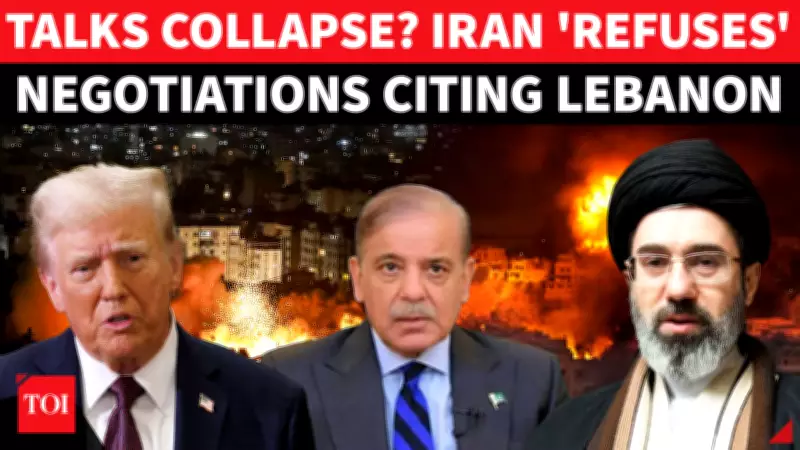
Iran Issues Ultimatum to U.S., Refuses Talks With Trump Administration
In a significant geopolitical development, Iran has drawn a firm red line in its diplomatic engagements with the United States. According to recent reports, Tehran has explicitly stated it will not participate in any negotiations with the Trump administration unless a key demand is met by Washington. This stance directly threatens a delicate two-week ceasefire that was recently established between the two nations through Pakistani mediation.
Ceasefire Confusion and Regional Tensions Escalate
The fragile truce, which was intended to de-escalate regional conflicts, has been thrown into uncertainty due to confusion over whether its terms include Lebanon. This ambiguity has been exacerbated by conflicting signals emanating from both U.S. and Israeli leadership, creating a volatile atmosphere in the Middle East. Iran has now clarified its position, insisting that any ceasefire agreement must explicitly include Lebanon, where Israeli military strikes have been ongoing.
Iran has categorically denied sending a delegation to Islamabad for talks, emphasizing that negotiations cannot proceed while Israeli attacks on Lebanese territory continue. This firm position raises the stakes significantly, as it links the ceasefire's survival to halting violence in Lebanon, a move that could either stabilize the region or trigger broader escalation.

Pakistan's Mediation Role and Warning of Derailment
Pakistan, which played a crucial role in brokering the initial ceasefire between the U.S. and Iran, has issued a stern warning regarding the current impasse. Pakistani officials have cautioned that continued violence and diplomatic deadlock could completely derail peace efforts, potentially unraveling weeks of careful mediation. The situation places immense pressure on all involved parties to find a resolution before tensions spiral further out of control.
The regional dynamics are particularly complex, with multiple actors holding divergent interests. Iran's insistence on including Lebanon in the ceasefire reflects its strategic concerns and alliances in the area, while the U.S. and Israel face their own political and security considerations. This multifaceted conflict underscores the challenges of achieving lasting peace in the Middle East.
Broader Implications for Middle East Stability
Tehran's uncompromising stance has raised legitimate fears of a wider Middle East escalation. By making Lebanon's inclusion a non-negotiable precondition for talks, Iran is effectively testing the limits of U.S. diplomatic influence and commitment to regional stability. The outcome of this standoff could have far-reaching consequences, potentially reshaping alliances and conflict patterns across the Middle East.
As regional stakes continue to rise, the international community watches closely, aware that the failure to resolve this issue could lead to renewed hostilities and further humanitarian crises. The delicate balance achieved through the ceasefire now hangs in the balance, dependent on whether the U.S. can meet Iran's key demand and bring all parties back to the negotiating table.






