

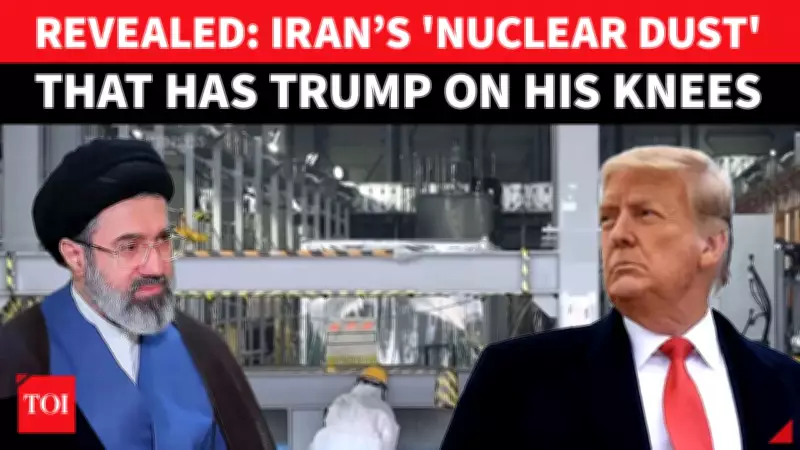
Iran's Nuclear Dust Revelation Stuns U.S., Trump Claims Tehran Agrees to Surrender Uranium
In a stunning development that has upended the stalled U.S.-Iran peace process, President Donald Trump has dropped a bombshell announcement, asserting that Tehran has agreed to hand over what he terms "nuclear dust." This dramatic twist, revealed on April 17, 2026, refers to highly enriched uranium believed to have been buried following U.S. and Israeli airstrikes on Iranian nuclear facilities. The revelation has sent shockwaves through diplomatic circles, leaving the Trump administration scrambling to capitalize on what could be a significant breakthrough toward a broader nuclear deal.
The Nuclear Dust Bombshell
President Trump's assertion centers on Iran's alleged commitment to surrender its cache of "nuclear dust," a colloquial term he uses for weapons-grade uranium that was reportedly hidden after targeted airstrikes. This material, if confirmed, represents a critical component of Iran's nuclear program, and its potential handover marks a pivotal shift in the long-stalled negotiations. The announcement comes amid heightened tensions in the Middle East, where Iran's nuclear ambitions have been a persistent flashpoint in international relations.
Trump framed this as a major concession from Iran, suggesting it could pave the way for a comprehensive agreement that addresses not only nuclear proliferation but also regional security concerns. However, experts caution that the details remain murky, with no independent verification of Iran's compliance or the exact nature of the uranium involved. The term "nuclear dust" itself has sparked debate, with some analysts viewing it as a strategic simplification by Trump to garner public support, while others see it as a genuine indicator of progress.

Implications for U.S.-Iran Relations
The revelation has left the Trump administration in a frenzied state, as officials work to verify the claims and negotiate the next steps. If true, this could represent a significant diplomatic victory for Trump, who has long sought to curb Iran's nuclear capabilities through a mix of sanctions and military pressure. The potential handover of enriched uranium would not only reduce immediate proliferation risks but also create an opening for broader talks on issues like ballistic missiles and regional proxy conflicts.
Yet, skepticism abounds, given the history of mistrust between the two nations. Iran has not publicly confirmed the agreement, and past negotiations have often collapsed over verification and implementation disputes. The timing is also critical, as this comes against a backdrop of other regional crises, including tensions with Israel and Russia's involvement in Ukraine, which could complicate the diplomatic landscape.
Broader Regional and Global Context
This development occurs within a complex web of Middle Eastern dynamics. Recent headlines have highlighted:
- Iran taking credit for an Israel-Hezbollah truce, showcasing its influence.
- U.S. Navy vulnerabilities exposed in the Iran conflict, leading to food rationing on warships.
- Russian warnings to NATO countries over Ukraine, adding to global instability.
- Mysterious disappearances of U.S. nuclear scientists, raising security concerns.
These factors underscore the high stakes of the nuclear dust revelation. A successful deal could ease tensions and foster stability, but failure might exacerbate conflicts and trigger further military escalations. As Trump hints at a potential visit to Islamabad, possibly to rally support, the international community watches closely, aware that this moment could redefine nuclear diplomacy in the 21st century.






