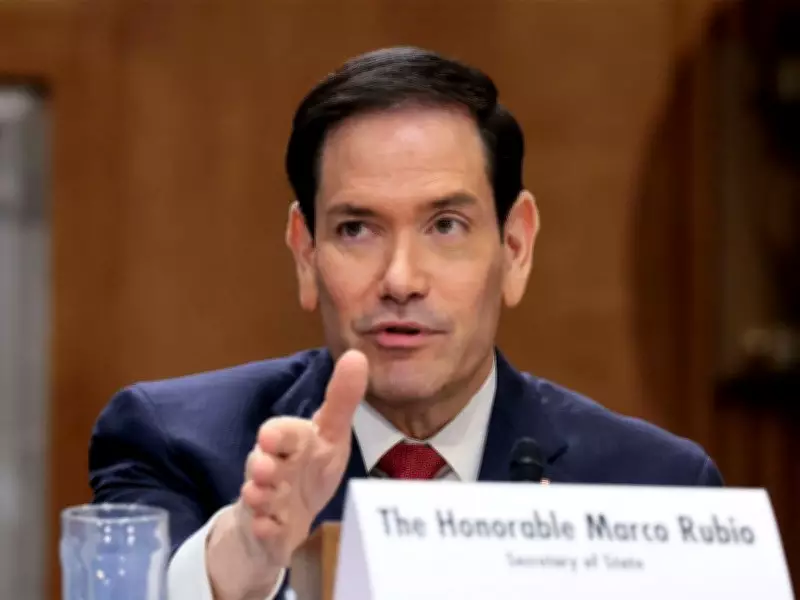
United States Secretary of State Marco Rubio informed lawmakers on Tuesday that negotiations regarding Iran's nuclear programme, as part of broader peace talks between the two nations, are expected to be highly technical in nature and could span several months before reaching a conclusion.
Rubio's Testimony Before the Senate Foreign Relations Committee
During his testimony before the US Senate Foreign Relations Committee, Rubio outlined that the next phase of discussions hinges on Iran taking specific actions. These include reopening the strategically vital Strait of Hormuz under mutually agreed conditions and addressing the disposition of its stockpile of highly enriched uranium.
Rubio emphasized that Phase 2 requires Iran to commit to very specific negotiations. He noted that the highly enriched uranium remains buried deep in a mountain, and Iran must agree to negotiate severe and long-term limitations or the complete cancellation of enrichment activities within its borders.

The Secretary of State highlighted the complexity of the issues, stating that such technical matters cannot be resolved quickly. He estimated that a team of experts would need to convene over a period of 30, 60, or even 90 days to work out the intricate details, provided Iran demonstrates a willingness to engage in such discussions.
Conditions for the Strait of Hormuz
Rubio further clarified that Iran must first declare the Strait of Hormuz open, ensure it remains toll-free, and take measures such as removing naval mines and refraining from targeting commercial vessels. He stressed that the United States has not offered sanctions relief in exchange for reopening the strait, and any future easing of sanctions would be strictly conditional on Iran's compliance.
Iran's Military Capabilities
The Secretary of State acknowledged that Iran still possesses a significant number of drones, though he noted that the relatively low cost of such technology makes it a persistent and difficult security challenge globally. He remarked that while Iran's drone-building capability has been eroded, the economics of drone warfare require a broader solution.
Rubio stated that Iran's so-called conventional shield, which includes missiles and drones used to protect its nuclear infrastructure, has been substantially eroded following recent US military actions. He added that what remains of Iran's navy has been significantly reduced, describing it as a collection of small boats with machine guns.
Economic Impact of Blockade
The US Secretary of State also claimed that the US blockade of Iranian ports is causing substantial economic losses for Tehran, costing Iran hundreds of millions of dollars in lost revenue each day.
These remarks come amid heightened tensions in West Asia, as a fragile ceasefire remains precarious. Diplomatic engagements between Iran and the US continue in an effort to achieve a comprehensive settlement to the overall conflict, which began on February 28 with US-Israel strikes against Iran.