

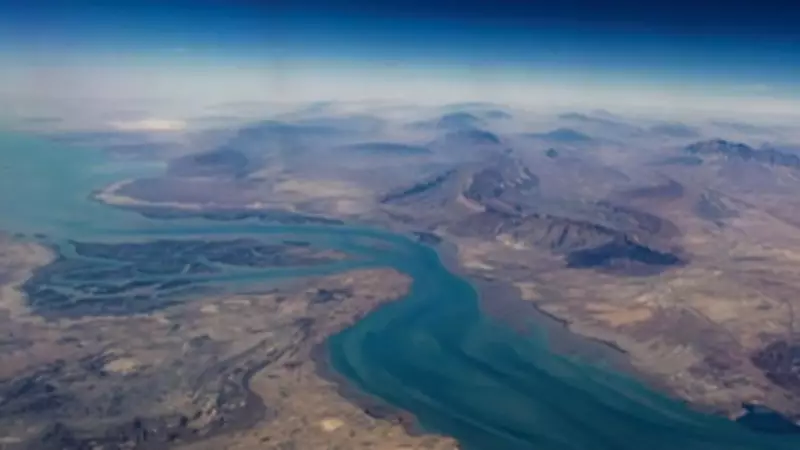
Iran Declares Strait of Hormuz Fully Open for Commercial Shipping During Lebanon Truce
In a significant development for global maritime trade, Iran has announced that all commercial vessels will be permitted to pass through the strategically vital Strait of Hormuz for the duration of the ceasefire between Israel and Lebanon. Foreign Minister Abbas Araghchi confirmed this decision through an official post on the social media platform X, marking a crucial step toward stabilizing one of the world's most important oil transit routes.
Official Announcement and Ceasefire Context
"In line with the ceasefire in Lebanon, the passage for all commercial vessels through Strait of Hormuz is declared completely open for the remaining period of ceasefire, on the coordinated route as already announced by Ports and Maritime Organisation of the Islamic Republic of Iran," stated Araghchi in his communication.
This announcement directly follows the implementation of a "cessation of hostilities" agreement between Israel and Lebanon that took effect on April 16. The initial ten-day truce was established to create necessary space for peace negotiations, according to the official text of the deal released by the United States State Department.

Key Provisions of the Lebanon-Israel Agreement
The ceasefire agreement contains several critical provisions aimed at reducing regional tensions:
- The Lebanese government, with international support, will undertake "meaningful steps" to prevent Hezbollah and other militant groups from launching attacks against Israeli targets
- Both parties recognize Lebanon's security forces as having "exclusive responsibility for Lebanon's sovereignty and national defense"
- While Israel retains the right to take "all necessary measures in self-defense," the agreement specifically prohibits "any offensive military operations against Lebanese targets, including civilian, military, and other state targets, in the territory of Lebanon by land, air, and sea"
These measures reflect ongoing diplomatic efforts since 2025 to disarm Hezbollah and establish lasting security arrangements in the region.
International Response and Maritime Security Efforts
France and the United Kingdom are scheduled to co-chair a crucial meeting on Friday involving approximately forty countries. This gathering aims to signal to the United States that key allies stand ready to assist in restoring freedom of navigation through the Strait of Hormuz, but only after hostilities have completely ceased in the region.
This diplomatic initiative comes in response to recent criticism from former U.S. President Donald Trump, who urged other nations to assume more active roles in the conflict and expressed dissatisfaction with NATO allies for what he perceived as insufficient involvement.
Background: Conflict Impact on Global Oil Markets
The U.S.-Israeli military operation against Iran that commenced on February 28 has resulted in thousands of casualties and triggered widespread instability across the Middle East. One of the most significant consequences of this conflict was the effective shutdown of the Strait of Hormuz—a maritime chokepoint through which approximately one-fifth of global oil and liquefied natural gas flows.
The closure raised serious concerns about a potentially unprecedented global oil shock, highlighting the critical importance of this narrow waterway to international energy markets and economic stability worldwide.
Strategic Implications and Future Outlook
Iran's decision to reopen the Strait of Hormuz represents a tangible confidence-building measure that could facilitate broader diplomatic progress. The coordinated route announced by Iran's Ports and Maritime Organisation provides a structured framework for safe passage during the ceasefire period.
As international stakeholders monitor developments closely, the successful implementation of both the maritime opening and the Lebanon-Israel ceasefire could establish important precedents for conflict resolution and regional cooperation in one of the world's most volatile geopolitical arenas.






