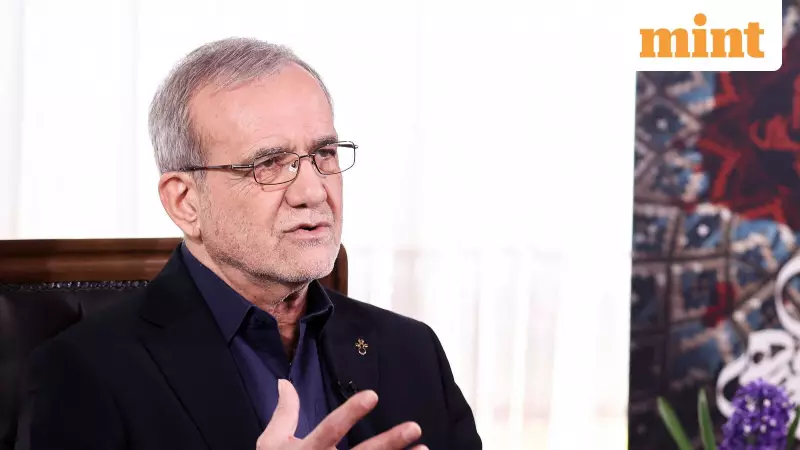
Iranian President Masoud Pezeshkian issued a stark warning on Sunday, 18 January. He stated that any attack on the country's supreme leader, Ayatollah Ali Khamenei, would mean a declaration of war.
President Pezeshkian's Strong Statement
In a post on the social media platform X, Pezeshkian made his position clear. He said, "If the people of Iran face hardship and difficulties in their lives, one of the main reasons for it is the longstanding enmity and inhumane sanctions imposed by the United States government and its allies."
He followed this with a direct threat. "Any aggression against the Supreme Leader of our country is tantamount to all-out war against the Iranian nation."

Context of the Warning
This statement comes amid ongoing tensions between Iran and the United States. The US and its allies have maintained strict sanctions on Iran for years. These sanctions target Iran's economy and leadership.
President Pezeshkian linked these sanctions directly to the hardships faced by ordinary Iranians. He blamed the "longstanding enmity" from the US for many of the country's problems.
What This Means for Regional Stability
The warning escalates the rhetoric in an already volatile region. By declaring that an attack on the Supreme Leader equals war, Pezeshkian sets a red line. This move aims to deter any potential actions against Iran's top religious and political figure.
Ayatollah Ali Khamenei holds ultimate authority in Iran. He is the highest-ranking political and religious leader. Protecting his position is a core priority for the Iranian government.
Observers note that such statements often serve multiple purposes:
- They rally domestic support by presenting a united front against external threats.
- They send a clear message to international adversaries about Iran's readiness to defend itself.
- They highlight the government's stance on sovereignty and leadership.
The situation remains tense. Further developments are expected as diplomatic channels continue their work.