

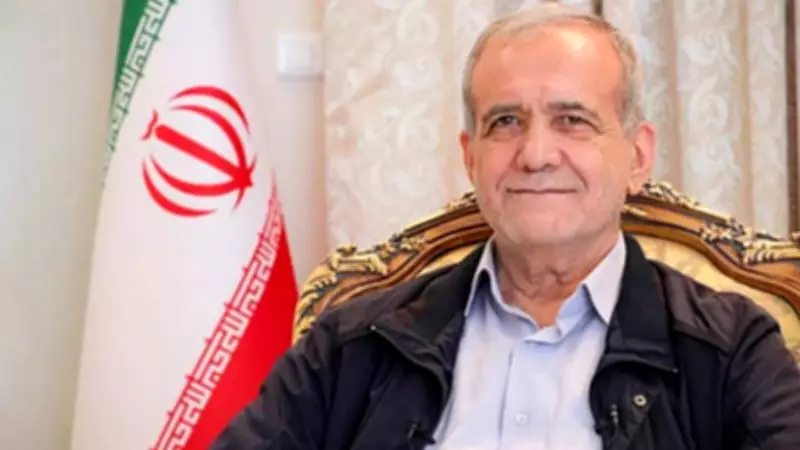
Iranian President Rejects War With United States, Warns Of Regional Consequences
Iranian President Masoud Pezeshkian declared on Saturday that Tehran is not pursuing a military conflict with the United States, emphasizing that a broader confrontation would be detrimental to all parties involved. The Iranian leader made these significant remarks during a telephone conversation with Egyptian President Abdel Fattah al-Sisi, according to an official statement released by the Iranian presidency.
Pezeshkian's Firm Stance Against Military Escalation
The Islamic Republic of Iran has never sought, and in no way seeks, war and it is firmly convinced that a war would be in the interest of neither Iran, nor the United States, nor the region, President Pezeshkian stated unequivocally. This diplomatic communication occurred against a backdrop of heightened regional tensions following the deployment of a formidable US naval battle group, spearheaded by the USS Abraham Lincoln, in proximity to Iranian waters.
US President Donald Trump has previously issued warnings about potential military action, while Iranian authorities have consistently maintained that they would respond decisively if subjected to any attack. The strategic positioning of American naval forces has intensified concerns about possible escalation in the volatile Persian Gulf region.

Parallel Diplomatic Developments And Security Warnings
In a related development, Iran's top security official, Ali Larijani, revealed on Saturday that there has been noticeable progress toward establishing structured negotiations with Washington. Contrary to the hype of the contrived media war, structural arrangements for negotiations are progressing, Larijani confirmed after concluding high-level talks in Moscow. This statement suggests ongoing diplomatic channels despite the publicly visible military posturing.
Simultaneously, Iran's army chief, Amir Hatami, issued a stern warning to both the United States and Israel against contemplating military action. Hatami asserted that Iran's armed forces are at full defensive and military readiness and cautioned that any miscalculation would pose a serious threat to regional security and stability.
Iran's Conditions For Nuclear Dialogue
The Iranian government has expressed willingness to engage in nuclear talks, but with a crucial precondition: discussions must exclude Iran's missile and defense programs from the negotiation table. This position creates a significant diplomatic hurdle, as these very programs have been central points of contention in previous negotiations.
President Trump has publicly stated his belief that Iran would ultimately prefer reaching a diplomatic agreement over facing military confrontation. This assessment adds another layer to the complex geopolitical calculus surrounding US-Iran relations.
Clarification On Recent Security Incidents
Separately, Iranian authorities moved to dispel speculation linking recent security incidents to external attacks. Officials specifically addressed an explosion in the strategic port city of Bandar Abbas, attributing it to a routine gas leak rather than any hostile action. This clarification aims to prevent misinterpretation of domestic incidents as provocations in an already tense environment.
The convergence of these statements from multiple Iranian officials presents a coordinated message: while Tehran maintains robust defensive capabilities and sets clear conditions for diplomacy, it fundamentally seeks to avoid military conflict that would destabilize the entire Middle East region.






