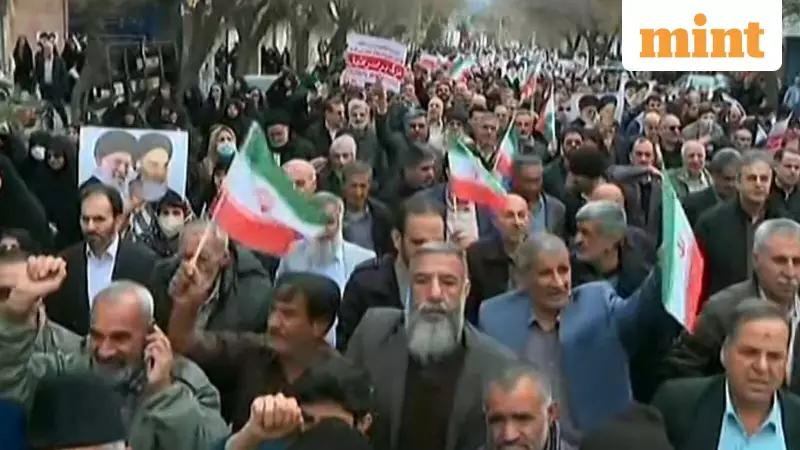
Iran has issued a stark warning of a severe crackdown on protesters, directly challenging US President Donald Trump's promise of support for peaceful demonstrations. The escalating unrest, driven by economic woes including inflation and currency devaluation, has turned deadly, with the death toll climbing to at least 62 and over 2,300 arrests reported by the US-based Human Rights Activists News Agency.
India's Stance and Concern for Nationals
In response to the volatile situation, India's Ministry of External Affairs (MEA) stated on Friday that it is closely monitoring developments in Iran. MEA spokesperson Randhir Jaiswal highlighted the significant Indian community in the country, noting, "We are closely following the developments in Iran. As you would have seen, we have also issued an advisory. We have some 10,000 Indian nationals and people of Indian origin in that country."
Jaiswal also addressed the reported detention of Indian crew members from a tanker seized by Iranian authorities in December. He confirmed that India has requested consular access for the 10 crew members understood to be in detention, and the embassy is in touch with Iranian authorities for their well-being.

Iran's Defiance and Escalating Rhetoric
The Iranian leadership has responded to the protests with defiant and aggressive rhetoric. Supreme Leader Ayatollah Ali Khamenei, 86, accused the demonstrators of destroying their own streets to "please the president of the United States." In a televised address, he hit back at Trump, claiming the US leader's hands were "stained with the blood of Iranians," while his supporters chanted "Death to America!"
In a move signaling a harsh response, Iran's judiciary chief, Gholamhossein Mohseni‑Ejei, promised that punishment for protesters "will be decisive, maximum and without any legal leniency." Iranian state media has repeatedly labeled the demonstrators as "terrorists," a term that has historically paved the way for violent government crackdowns.
International Reactions and Activist Reports
Despite an internet and international phone blackout imposed by the authorities, activists managed to share videos showing protesters chanting against the government around bonfires, with debris littering streets in Tehran and other areas into Friday morning.
From exile, Crown Prince Reza Pahlavi, whose father fled during the 1979 revolution, urged Trump to support the protesters. He warned that Khamenei aimed to use the communication blackout "to murder these young heroes" and described Trump as a man of peace who should be prepared to intervene.
While Washington has not issued an immediate response, Trump has previously reiterated a pledge to strike Iran if protesters are killed—a warning that carries added weight after the US military operation targeting Venezuela's Nicolás Maduro. The situation remains tense, with the world watching as Iran confronts one of its most significant waves of dissent in recent years.