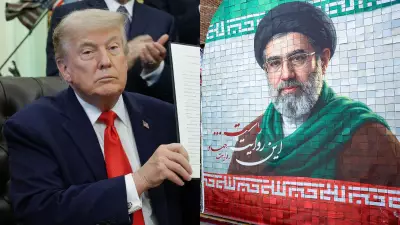
The dramatic capture of Venezuelan President Nicolás Maduro by United States forces has sent shockwaves through Tehran, fundamentally scrambling Iran's strategic calculations. This audacious move, following President Donald Trump's explicit threat to intervene on behalf of Iranian protesters, has introduced a new and urgent layer of risk for the Islamic Republic's leadership.
A New Precedent of US Intervention
On Friday, January 2, 2026, President Trump declared that Washington was "locked and loaded" to aid Iranian demonstrators if the regime cracked down harshly. Merely a day later, the world witnessed an unprecedented escalation: U.S. military strikes in Caracas led to the capture of Maduro and his wife, Cilia Flores, who were transported to the U.S. to face criminal charges.
This operation marks the most daring action by the Trump administration to date, surpassing recent airstrikes in Yemen, Nigeria, and Syria. The capture of a serving head of state from his own capital has few parallels in modern American foreign policy, recalling only the 1990 capture of Panama's Manuel Noriega.

Sanam Vakil of Chatham House noted this confirms Trump's unpredictability, stating, "It confirms that Trump is unpredictable and truly everything is on the table vis a vis Iran." For Iranian officials, the event transforms abstract threats into a tangible and alarming precedent.
Iran's Mounting Vulnerabilities
The raid comes at a time when Iran's leadership is already grappling with severe setbacks. A disastrous 12-day war in June saw Israel shatter Iran's air defenses and bomb key nuclear facilities, with the U.S. joining late in the conflict. Israeli operations also decimated Tehran's key regional proxies, Hezbollah and Hamas, weakening its deterrent network.
Now, Maduro's fate forces a grim new consideration: the potential forcible removal of Iran's own Supreme Leader, Ali Khamenei. Roozbeh Aliabadi, an Iranian consultant, called the capture a "game changer for Iran," opening possibilities previously deemed unthinkable. The regime must weigh this external threat against escalating internal dissent.
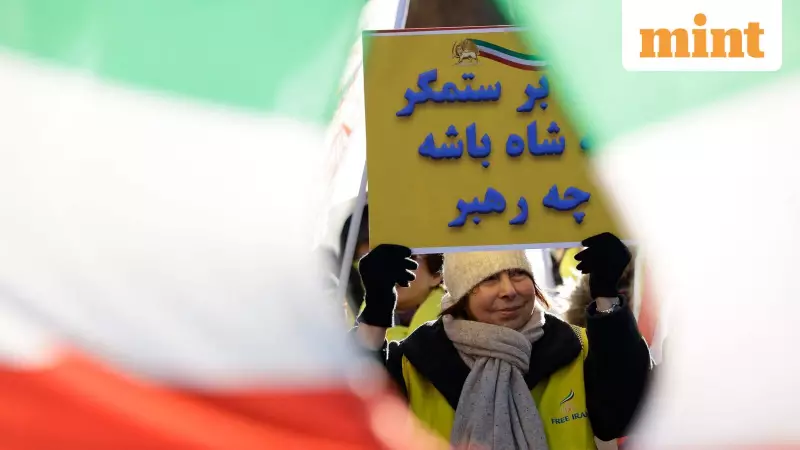
Protests, triggered by a collapsing currency, have now spread to at least 60 cities, resulting in a minimum of 15 protester deaths according to Human Rights Activists in Iran. Khamenei's response has been mixed, acknowledging economic woes while blaming "the enemy" for orchestrating unrest and vowing to deal with "rioters."
A Narrowing Path for the Regime
Trump's recent threat significantly broadens the potential justification for military action to include human rights protection, analysts observe. This, combined with the Venezuelan operation, empowers protesters and boxes in the Iranian leadership. Mustapha Pakzad, a geopolitical analyst, summarized the crisis: "2026 starts as a nightmare for the Iranian leadership. The regime’s options have been narrowed very significantly."
Iran's formal reaction was swift. The Foreign Ministry called on the United Nations to halt the "illegal U.S. aggression" against Venezuela. Foreign Minister Abbas Araghchi, in a call with his Venezuelan counterpart Yvan Gil, labeled the capture "a clear example of state terrorism." Several top Iranian leaders have also threatened retaliation should Trump follow through on his pledge to intervene.
As the supreme leader since 1989, Khamenei's rigid stance on uranium enrichment and repressive domestic policies remain central to the crisis. With Israel praising Maduro's removal and Trump's warnings ringing loud, the Iranian regime faces a perfect storm of external pressure and internal revolt, compelling a fraught and urgent reassessment of its survival strategy.