

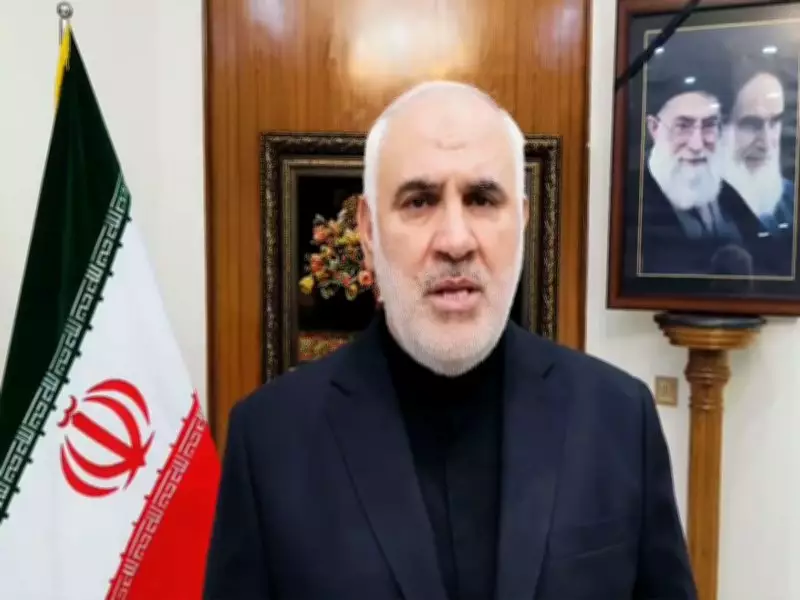
Iranian Envoy Rejects Trump's Ultimatum, Accuses US of Market Manipulation
In a firm rebuttal to recent statements from Washington, Iran's Ambassador to India, Mohammad Fathali, has categorically dismissed US President Donald Trump's calls for dialogue as a tactic aimed at manipulating financial and oil markets. Speaking exclusively to ANI, the envoy asserted that there are currently no diplomatic channels open between Tehran and the United States, directly contradicting Trump's claims of "constructive talks."
No Negotiations Underway, Says Ambassador
Ambassador Fathali clarified that despite President Trump's extension of a "48-hour ultimatum" into a five-day pause, citing ongoing discussions, no such negotiations—direct or indirect—are taking place. He attributed Trump's social media assertions to an attempt to escape the difficult geopolitical situation faced by the United States and Israel, rather than genuine diplomatic outreach. "We neither fear Trump's ultimatum nor consider his calls for talks to be authentic," Fathali stated, emphasizing that Iran remains unfazed by such pressures.
Conditions for Diplomacy and Regional Stability
The envoy outlined that any future diplomacy with the US hinges on a real change in American behavior, noting the contradiction between Washington's dialogue rhetoric and its continued attacks on Iranian infrastructure. On regional maritime security, Fathali addressed concerns about Indian vessels, confirming that while he lacks precise numbers, reported cases are being monitored, and some ships have already secured safe passage. He attributed any transit delays to destabilizing conditions created by adversaries in the region.

Strait of Hormuz Remains Open for Most Vessels
Fathali reassured that the Strait of Hormuz is not closed, clarifying that only vessels from aggressor parties—specifically the United States and Israel—are prohibited from transit under international law. Other countries' ships, provided they do not support aggression against Iran, can navigate safely. He praised India's potential role in de-escalating the crisis, highlighting its balanced foreign policy and leadership in the Global South as assets for reducing misunderstandings.
Iran's Stance on Conflict and Future Outlook
Regarding the ongoing conflict, the Ambassador maintained that Iran did not initiate hostilities but is prepared to see them through to the end. He listed Iran's conditions for resolution, including a complete cessation of aggressive actions, credible guarantees against future attacks, accountability for aggressors, and respect for Iran's lawful rights. Under President Pezeshkian's leadership, Iran will continue its path of resistance, guided by the principle that the cost of resistance is lower than surrender, as learned from past martyrs.






