

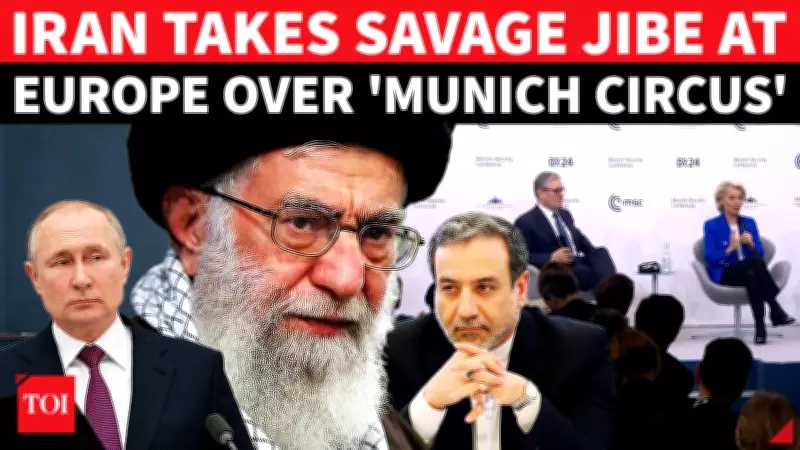
Iran and Russia Unite in Opposition to Europe as Munich Summit Descends into Geopolitical Confrontation
The Munich Security Conference, a prestigious annual gathering of global leaders, transformed into a stark geopolitical battleground this week as Iran and Russia presented a united front against European powers. The event, traditionally a forum for diplomatic dialogue, was marked by sharp rhetoric and escalating tensions that underscore the deepening fractures in international relations.
Iran's Foreign Minister Launches Scathing Attack on EU and Germany
Iran's Foreign Minister, Abbas Araghchi, delivered a blistering critique of the European Union, with particular focus on Germany, during his address at the conference. In a statement that reverberated through the halls of the summit, Araghchi dismissed the Munich Security Conference as nothing more than a "circus," accusing the EU of a profound loss of geopolitical relevance.
He asserted that European nations, led by Germany, have effectively surrendered their regional policy initiatives to Israel, thereby undermining their own strategic autonomy and influence on the world stage. This accusation points to a growing perception in Tehran that European diplomacy in the Middle East is increasingly aligned with Israeli interests, a stance that Iran vehemently opposes.

Exiled Iranian Crown Prince Calls for U.S.-Backed Regime Change
Amidst the diplomatic fireworks at the summit, Reza Pahlavi, the exiled Crown Prince of Iran, made a significant appeal from the sidelines. He publicly called upon U.S. President Donald Trump to intensify pressure on the Iranian government and to actively support efforts towards regime change in Tehran.
Pahlavi's plea highlights the internal and external pressures facing the Iranian regime, as dissident voices seek international backing to challenge the current leadership. His intervention adds another layer of complexity to the geopolitical dynamics at play, illustrating how domestic Iranian politics are inextricably linked to broader global confrontations.
Russia's Role in the Emerging Anti-European Alliance
While the article focuses on Iran's provocations, the implied alliance with Russia suggests a coordinated strategy to counter European influence. Russia, a long-time ally of Iran, is likely leveraging this partnership to assert its own geopolitical ambitions and to challenge the Western-led international order.
The convergence of Iranian and Russian interests at the Munich Summit represents a significant shift in global power dynamics, with both nations positioning themselves as counterweights to European and, by extension, Western hegemony. This alignment could have far-reaching implications for:
- Security policies in the Middle East and Eastern Europe
- International diplomatic efforts, including nuclear negotiations
- Economic sanctions and trade relations
Broader Implications for Global Geopolitics
The events at the Munich Security Conference signal a troubling escalation in geopolitical rivalries. The transformation of the summit into a "warzone" of words and ideologies reflects the increasingly polarized nature of international relations. Key takeaways from this development include:
- The erosion of traditional diplomatic forums as venues for constructive dialogue
- The growing assertiveness of anti-Western alliances led by nations like Iran and Russia
- The potential for increased instability in regions where these geopolitical tensions intersect
As global leaders grapple with these challenges, the Munich Summit has underscored the urgent need for renewed diplomatic engagement and conflict resolution mechanisms to prevent further deterioration in international relations.






