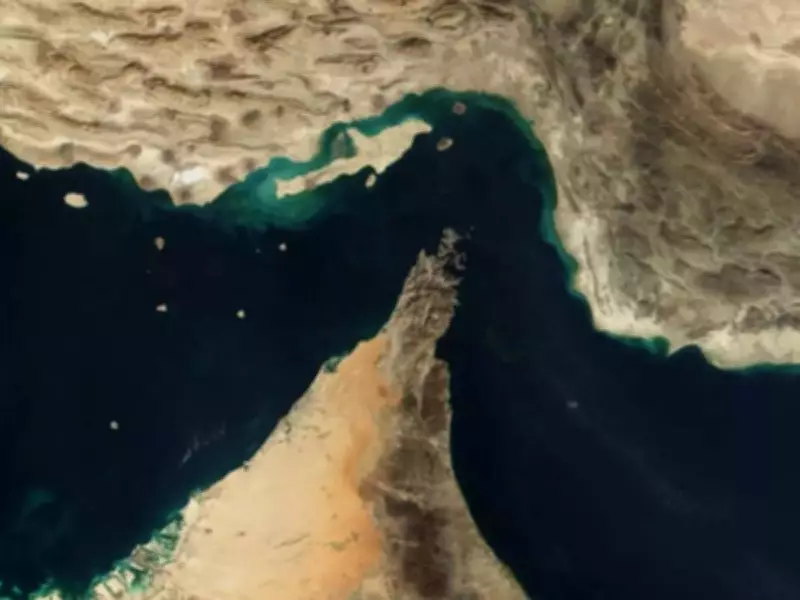
Iran Proposes Cryptocurrency Toll System for Strait of Hormuz During Ceasefire
Iran is seeking to strengthen its control over the strategically vital Strait of Hormuz during the current fragile two-week ceasefire period. The nation has proposed an unprecedented system that would require oil tankers to pay transit tolls using cryptocurrency while undergoing rigorous scrutiny and monitoring procedures.
Strict Monitoring and Digital Payment Requirements
Hamid Hosseini, spokesperson for Iran's Oil, Gas and Petrochemical Products Exporters' Union, stated that Tehran intends to closely monitor every vessel moving through this critical global waterway. "Iran needs to monitor what goes in and out of the strait to ensure these two weeks aren't used for transferring weapons," he emphasized.
Under the proposed framework, tankers would be required to share comprehensive cargo details via email before being assigned a transit fee, which is reportedly set at $1 per barrel. The most distinctive aspect of this plan involves mandatory payments in digital currencies.

"Once the email arrives and Iran completes its assessment, vessels are given a few seconds to pay in bitcoin, ensuring they can't be traced or confiscated due to sanctions," Hosseini explained, highlighting how this approach circumvents international financial restrictions.
Warning Shots and Rising Tensions
The situation has escalated with a stark warning issued to vessels operating in the Gulf region. According to a recording shared with the Financial Times, a radio broadcast in English received by tankers declared: "If any vessels try to transit without permission, [they] will be destroyed."
This threatening message has effectively paralyzed movement through the strait, with most shipping companies adopting a cautious wait-and-watch approach. Currently, only a limited number of vessels, primarily those linked to Iran, are attempting passage through the contested waters.
Ceasefire Under Strain and Global Shipping Impacts
The future of transit through the Strait of Hormuz has emerged as a central sticking point in efforts to convert the temporary ceasefire into a lasting arrangement. While Iran seeks oversight and control, Gulf states and Western allies are mounting strong opposition.
US President Donald Trump has insisted that the ceasefire depends on "the Islamic republic of Iran agreeing to the COMPLETE, IMMEDIATE, and SAFE OPENING of the Strait of Hormuz," according to his social media statements. Iran has countered by signaling that any reopening would involve a new "protocol for secure passage" coordinated with its armed forces.
The uncertainty has created a massive shipping bottleneck, with industry estimates suggesting 300 to 400 vessels are currently waiting to exit the Gulf. One shipping executive described the situation as resembling a "car park" of stranded ships.
Major shipping firms remain extremely cautious. Maersk stated it is "working with urgency" to understand evolving conditions but warned that the ceasefire does not yet guarantee safe passage. Analysts predict that even under controlled conditions, only 10 to 15 ships may pass daily—far below the pre-conflict average of 135 vessels—making rapid clearance of the backlog highly unlikely.
Strategic Stakes and Regional Opposition
Allowing Iran to retain any degree of control over the Strait of Hormuz is viewed as unacceptable by Gulf powers including Saudi Arabia, Qatar, and the United Arab Emirates, given the waterway's crucial role in global oil transportation.
Ali Shihabi, a commentator with connections to the Saudi royal court, stated unequivocally: "Allowing Iran any form of control over the strait would be a red line. The priority has to be unimpeded access through the strait."
As ceasefire negotiations continue to evolve with simmering tensions beneath the surface, the Strait of Hormuz remains a dangerous flashpoint where diplomacy, energy security concerns, and military risks are converging with potentially global consequences.