

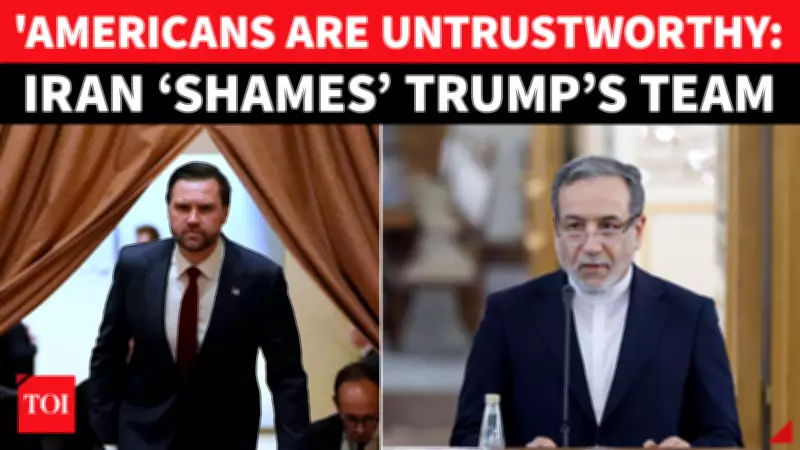
Iran's Stern Warning to Trump Administration Over Israel Ties
In a dramatic escalation of diplomatic tensions, senior Iranian lawmaker Ebrahim Azizi has issued a forceful warning to the United States, demanding that Washington break its alliance with Israel or face potential consequences. Azizi, who chairs Iran's parliamentary National Security Commission, delivered this explosive statement during a period of heightened friction in the Middle East.
No Trust in Washington
Azizi made it clear that Tehran has entered a phase of negotiations with the United States but emphasized there is "no trust" in Washington's intentions. He specifically characterized the U.S. as "untrustworthy," particularly under the current administration led by President Donald Trump. This declaration comes amid stalled diplomatic talks between the two nations.
The Strait of Hormuz: A Non-Negotiable Red Line
Central to Iran's warning is its firm stance on the Strait of Hormuz, a critical global oil shipping route. Azizi asserted that control over this strategic waterway is absolutely non-negotiable for Iran. The statement serves as a direct response to recent U.S. military movements in the region, including the deployment of two destroyers to the area.

Broader Regional Context
This warning unfolds against a backdrop of multiple regional conflicts and provocations:
- Pro-Iran Hezbollah forces have launched attack drones into northern Israel
- Iran has ridiculed Trump and Vice President Vance after failed diplomatic talks in Islamabad
- Israeli Prime Minister Netanyahu has threatened to bomb Iran's nuclear facilities
- Drone strikes have targeted areas near U.S. diplomatic convoys in Baghdad
Azizi emphasized that Iran remains "ready for any scenario" and maintains what it perceives as the upper hand in current negotiations. The lawmaker's comments reflect Tehran's growing confidence amid what it views as diplomatic setbacks for the Trump administration.
Implications for U.S. Foreign Policy
The Iranian warning presents a significant challenge to U.S. Middle East policy, particularly regarding:
- The longstanding U.S.-Israel alliance
- Freedom of navigation in the Strait of Hormuz
- Ongoing nuclear negotiations with Iran
- Regional stability amid multiple proxy conflicts
As tensions continue to mount, the international community watches closely to see how the Trump administration will respond to what amounts to an ultimatum from one of America's most persistent adversaries in the region.






