

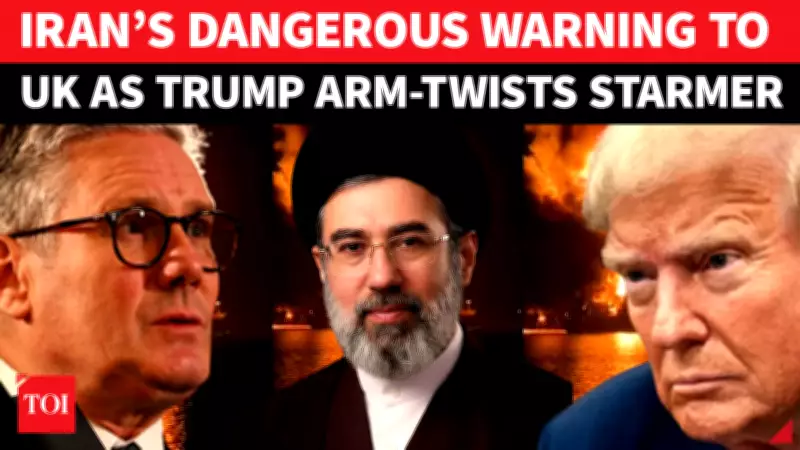
Iran Issues Stark Warning to UK Over Military Support for US Operations
Iran has delivered a forceful diplomatic warning to the United Kingdom, condemning its support for United States military activities in the Middle East as a direct act of "participation in aggression." The warning comes amid escalating regional tensions and follows pressure from former US President Donald Trump on UK Prime Minister Keir Starmer to assist in war operations.
Accusations of Backing US and Israeli Strikes
Iranian Foreign Minister Abbas Araghchi publicly accused London of actively backing US and Israeli strikes that target Iran's missile infrastructure. In a strongly worded statement, Araghchi emphasized that providing access to British military bases effectively makes the UK a participant in aggressive actions against Iran.
While the UK government maintains that its role is purely defensive, it has notably permitted the use of critical strategic bases such as RAF Fairford and Diego Garcia for US-led operations. Additionally, Britain has significantly increased its own military deployments in the region, including fighter jets and naval assets, signaling a deeper and more committed involvement in the expanding conflict.

Heightened Military Readiness and Regional Implications
The UK's enhanced military posture, characterized by heightened readiness and expanded asset deployment, has drawn sharp criticism from Tehran. Iranian officials have warned that these actions will have serious and lasting consequences for future bilateral relations between Iran and the United Kingdom.
As tensions continue to mount, Britain finds itself under growing international scrutiny for its expanding role in a volatile regional conflict. The situation is further complicated by political pressure from figures like Donald Trump, who has urged Prime Minister Starmer to provide more substantial assistance in ongoing war operations.
Broader Context of Escalating Middle East Tensions
This diplomatic confrontation occurs against a backdrop of intensifying conflict in the Middle East, where multiple nations are navigating complex alliances and military strategies. Iran's warning underscores the high stakes involved, as any miscalculation could lead to broader regional instability.
The UK's decision to allow base access and increase military presence reflects a strategic alignment with US interests, but it also exposes Britain to significant geopolitical risks. Tehran's response indicates that Iran views these developments as provocative moves that could trigger further escalation.
Observers note that the situation remains fluid, with potential implications for international diplomacy, security arrangements, and the overall balance of power in the Middle East. The coming weeks may prove critical in determining whether diplomatic channels can ease tensions or if military posturing will lead to more direct confrontations.






