

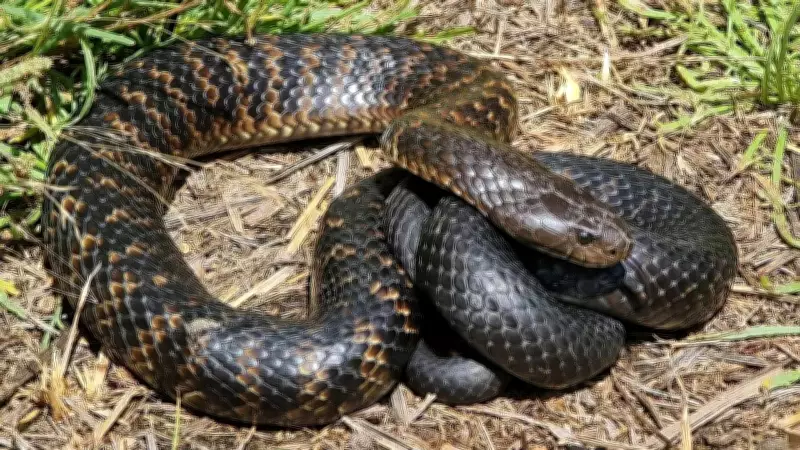
A traveller moving through southern Australia could encounter a snake beside a wetland in Victoria, another on a Tasmanian shoreline and a third on a small offshore island, then assume they were looking at different animals. In some cases, the colour would differ. The size might too. Even the markings could seem unrelated. Yet all of them could belong to the same species: the tiger snake.
Its reputation usually rests on venom, which is understandable. Tiger snakes rank among Australia's medically significant snakes. Still, what makes them interesting is not simply their ability to defend themselves. It is the way populations have adapted to local conditions across a landscape that has been changing for thousands of years.
How isolation and changing landscapes shaped the tiger snake's many forms
According to the World Atlas, the tiger snake's range stretches across environments that share very little with one another. Some populations occupy marshy ground and waterways. Others live on islands separated from the mainland long ago.

Isolation has left its mark. In certain locations, the snakes are dark and almost patternless. Elsewhere, bands stand out clearly across the body. Size can vary as well. A snake growing up on one island may reach dimensions that would be unusual for individuals elsewhere. Naturalists have long recognised several forms and subspecies, reflecting the way separate populations have responded to their surroundings over generations.
Where tiger snakes live and how the changing seasons influence their behaviour
Water tends to shape much of the tiger snake's daily life. According to the Victorian Government wildlife fact sheet on tiger snakes, the wet habitats attract frogs, fish and other prey, making such areas particularly favourable. Yet the species is not confined to marshes. Grasslands, rocky stretches of coast and inland habitats can all support tiger snakes.
Like other reptiles, they depend on external warmth rather than producing their own body heat. During colder periods, activity drops sharply. Winter is often spent hidden away in sheltered locations, out of sight and largely inactive until temperatures improve. This seasonal rhythm affects where snakes are seen and when encounters with people become more common.
From frogs and fish to birds and rodents, tiger snakes are adaptable hunters
The prey available in one habitat may be absent in another, so tiger snakes have developed a flexible approach to feeding. According to the Victorian Government wildlife fact sheet on tiger snakes, snakes living near water might spend much of their time pursuing amphibians. In a different setting, rodents could become more important. Birds occasionally feature as well. On some islands, seasonal seabird colonies provide opportunities that mainland populations never experience.
Such variation means there is no single tiger snake lifestyle. Feeding habits often mirror whatever resources happen to dominate the local environment.
Why tiger snakes usually avoid conflict despite their powerful venom
Stories about tiger snakes usually focus on venom. The concern is justified because untreated bites can become serious very quickly. According to the World Atlas, their venom contains compounds capable of disrupting several bodily systems at once, which is why immediate medical attention is required after a bite.
Yet people who study these snakes often describe them as defensive rather than confrontational. A tiger snake, faced with disturbance, commonly attempts to avoid further contact. If that fails, it may rely on visual displays and loud hissing before resorting to biting. The image of a snake actively pursuing humans bears little resemblance to how most encounters unfold in the wild.
Why tiger snakes remain an important part of Australia's ecosystems
Tiger snakes occupy an important position in the ecosystems where they occur. By feeding on smaller animals, they influence populations that might otherwise expand unchecked. They also become prey themselves, particularly when young.

As per the World Atlas, modern pressures come from more than natural predators. Roads, habitat changes and deliberate killing continue to affect local populations despite legal protections in many areas. Their future is tied to the landscapes they inhabit. Wetlands, coastlines, islands and grasslands all support different versions of the same species. Taken together, they reveal a snake that is far more adaptable and far more varied than its reputation alone would suggest.





