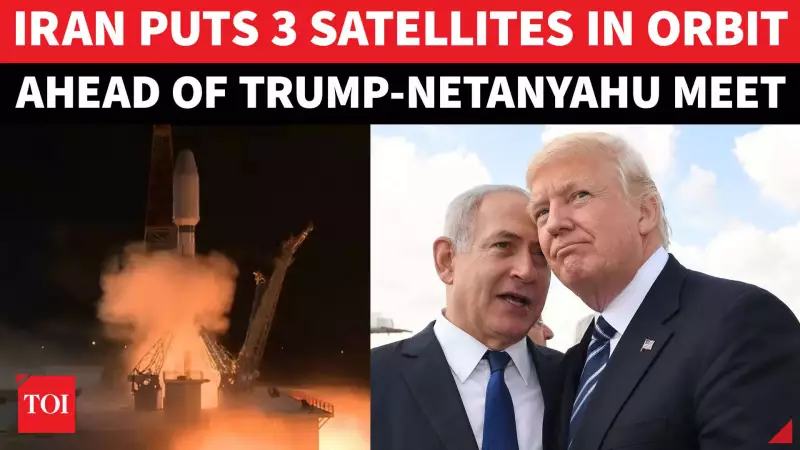
In a significant leap for its space ambitions, Iran has successfully placed three domestically developed satellites into orbit, marking its first-ever multi-satellite mission. The launch, conducted on December 29, 2025, utilized a Russian Soyuz rocket, highlighting deepening technological cooperation between Tehran and Moscow amidst ongoing global tensions.
A Major Milestone for Iran's Space Program
This launch represents a pivotal achievement for Iran's aerospace sector, which has persisted under the weight of international sanctions. The payload included the Tolu-3 satellite, noted as the heaviest spacecraft Iran has built to date. Officials in Tehran have hailed the mission as a triumph of indigenous innovation, demonstrating self-reliance in critical technology domains despite external pressure.
Enhanced Capabilities and Western Alarm Bells
The successful deployment of Tolu-3 is particularly notable for its advanced surveillance and high-resolution imaging capabilities. While Iran frames these advancements as peaceful and scientific, the development has triggered immediate concern among Western powers and Israel. Security experts and governments fear the underlying technology is inherently dual-use, meaning the same expertise and systems used to launch satellites can be applied to the development of long-range ballistic missiles.

This concern is not unfounded, as advancements in rocket staging, guidance systems, and re-entry technology directly correlate with missile program progress. The involvement of Russia's space agency in facilitating the launch adds another layer of geopolitical complexity, signaling a strengthening alliance that could alter the strategic balance in the Middle East and beyond.
Deepening Iran-Russia Ties Amid Global Tensions
The collaborative space mission underscores the rapidly evolving partnership between Iran and Russia. As both nations face increasing isolation and sanctions from the West, they are turning to each other for strategic, military, and technological support. This launch is seen as a tangible manifestation of that cooperation, extending beyond the battlefield in Ukraine or energy deals into the high-stakes arena of space and advanced rocketry.
The event has undoubtedly sent ripples through diplomatic and defense circles in Washington and Tel Aviv. Analysts are closely examining the technical data from the launch to assess the precise level of Iran's newfound capabilities. The development is expected to fuel further debate on the efficacy of non-proliferation sanctions and could lead to calls for more stringent measures to curb the transfer of sensitive technology.
In conclusion, Iran's landmark multi-satellite launch is more than a scientific achievement; it is a potent geopolitical signal. It showcases Tehran's determined progress in a sensitive technological field and illustrates the practical outcomes of its alignment with Moscow, setting the stage for heightened regional and global security assessments in the coming year.