Iran's Missile Displays Target US Military Assets in Middle East
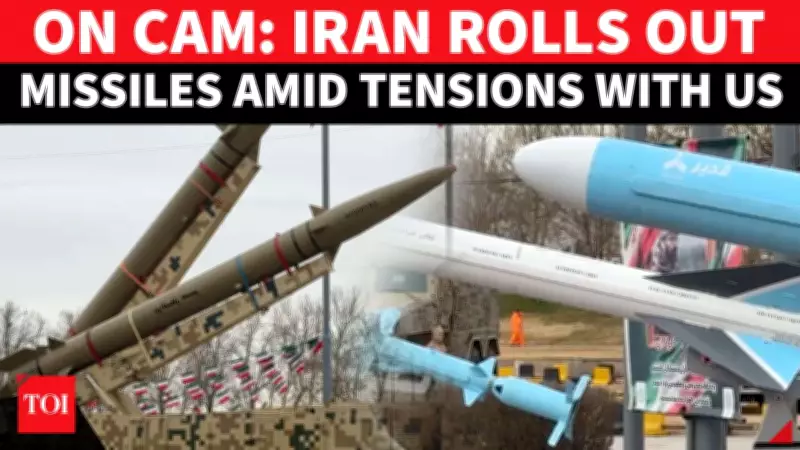
Tehran was adorned with national flags and showcased missile exhibits as Iran commemorated the 47th anniversary of the 1979 Islamic Revolution. The celebrations unfolded against a backdrop of escalating military tensions and internal political strain, with the country's strategic posture drawing intense global scrutiny.
Massive Demonstrations Across the Nation
Official marches occurred in more than 1,400 locations throughout Iran, drawing significant crowds to mark the historic revolution that transformed the nation's political landscape. The scale of participation highlighted both government-organized support and underlying societal divisions that have characterized recent years.
President Pezeshkian's Address and Nuclear Denials
During the anniversary events, President Masoud Pezeshkian delivered a notable address that included an apology to citizens affected by recent protest movements. More significantly, he explicitly denied that Iran seeks to develop nuclear weapons, stating this position clearly amid ongoing negotiations with the United States and international concerns about Tehran's nuclear program.

On the eve of the official celebrations, social media platforms circulated footage showing dissenting chants emerging from residential balconies in various urban areas. These unofficial expressions of opposition provided a counter-narrative to the government-organized displays of unity and highlighted the complex domestic political environment.
Geopolitical Context and Military Tensions
The anniversary celebrations occurred as nuclear negotiations between Iran and the United States continue without resolution, creating an atmosphere of diplomatic uncertainty. Simultaneously, military tensions have been simmering in the Middle East region, with Iran's missile capabilities and strategic positioning becoming increasingly relevant to regional security calculations.
The displayed missile systems during the anniversary events were interpreted by many analysts as symbolic messaging directed toward US military assets stationed throughout the Middle East. This visual demonstration of military capability coincided with ongoing discussions about Iran's regional influence and its confrontational stance toward American presence in the area.
Internal and External Pressures ConvergeObservers noted that the 47th anniversary events revealed how internal political dynamics and external geopolitical pressures are increasingly converging for Iranian leadership. The government's need to project strength internationally while managing domestic dissent creates a complex balancing act that influences both foreign policy decisions and domestic governance approaches.
The anniversary ultimately served as a platform for multiple messages: demonstrating national resilience, addressing international concerns about nuclear ambitions, acknowledging domestic discontent, and showcasing military readiness—all while nuclear negotiations with the United States remain in a delicate and unresolved state.